Hydraulic Lift Safety: Inspection Routines That Prevent Workshop Accidents
Hydraulic lift accidents almost never happen out of nowhere — they happen because somebody skipped an inspection. The single most effective way to prevent workshop lift failures is a layered routine: a 2-minute daily walk-around, a monthly hands-on inspection, and an annual certified examination, each documented in a logbook. Get those three rhythms in place and you eliminate roughly 90% of the failure modes that put vehicles on the floor and technicians in the hospital.
Why Most Lift Failures Are Predictable (And Preventable)
The Automotive Lift Institute estimates that the vast majority of lift incidents trace back to three root causes: improper loading, neglected maintenance, and worn safety locks. None of those are mysterious mechanical surprises. They're maintenance problems wearing a mechanical disguise.
Consider what actually fails on a hydraulic lift. Cylinder seals leak gradually — you'll see oil weeping for weeks before pressure drops. Equalization cables stretch and fray visibly long before they snap. Lock ladders chip and bend in ways that show up under a flashlight. The lift is telling you it's tired. The question is whether anyone is listening.
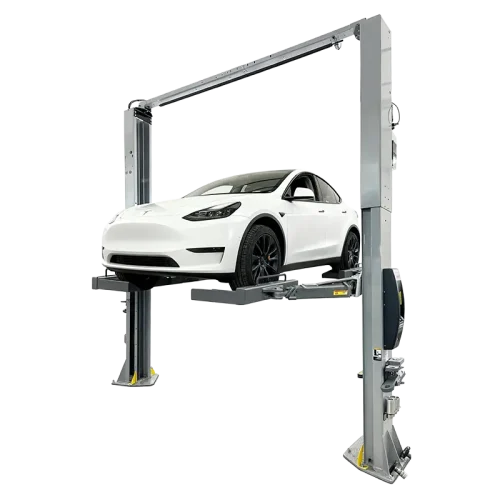
For instance, an independent shop in Texas had a 2-post lift drop a Ford F-250 in 2023. The post-incident report? A safety lock had been catching intermittently for four months. Three different techs noticed it. Nobody wrote it down. Nobody fixed it. That's the gap a real inspection routine closes — the same lock, hydraulic and fastener checks apply whether you run a two-post or a four post lift.
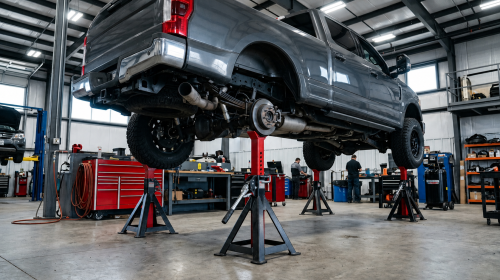
Close-up of hydraulic lift cylinder seal inspection with flashlight
The Daily Pre-Use Walk-Around (2 Minutes, Every Shift)
Before the first vehicle goes up each day, the lift operator should run a fast visual and functional check. This isn't paperwork theater — it's the single highest-ROI safety habit in your shop.
Visual checks
Hydraulic fluid puddles or wet streaks on the cylinder, hoses, or floor
Visible damage to arms, pads, columns, or overhead beam
Frayed cables or chains (look for “fish-hooks” — broken wire strands)
Loose or missing anchor bolts at the column base
Bent, chipped, or worn locking ladder teeth
Functional checks
Raise the lift empty about 1 meter and listen for unusual noises
Engage the safety locks — both columns must seat audibly
Lower onto the locks and confirm the lift holds without drift
Test the emergency stop or lowering valve
If anything looks or sounds wrong, the lift goes out of service until it's fixed. No exceptions, no “just one more job.” Tag it, lock it out, and route work to another bay.
Monthly Hands-On Inspection: What to Actually Touch
The monthly inspection is where you find the problems the daily check misses. Budget 30–45 minutes per lift and have the foreman or senior tech do it personally.
Cables, chains, and synchronization
On 2-post and 4-post lifts, equalization cables or chains keep the carriages level, while a scissor lift relies on hydraulic cylinders and mechanical safety locks. Check tension by pressing on each cable mid-span — both sides should feel equal. Inspect every inch for fraying, kinks, corrosion, or flattened spots. Replace cables that show more than 6 broken wires per lay length, per ANSI standards.
Hydraulic system
Check fluid level with the lift fully lowered. Top up only with the manufacturer-specified hydraulic oil — mixing fluids degrades seals. Inspect hoses for bulges, abrasion, and crimped fittings. A bulging hose is a burst hose with a deadline.
Arm restraints and locking gears
On 2-post lifts, arm restraint gears must engage automatically when the lift rises. Lift the arm slightly and try to swing it — it should lock solid above the lowest position. Worn restraint teeth are a leading cause of arms swinging out under load.
Anchor bolts
Torque-check anchor bolts to the manufacturer's spec (typically 110–150 ft-lbs for 3/4” wedge anchors). Concrete settles. Bolts loosen. A column that rocks even slightly under load is a column on its way to tipping.
Annual Certified Inspection: What an ALI Inspector Looks For
Once a year, every hydraulic lift in your shop should be inspected by a qualified third-party inspector — ideally ALI Certified in North America, or the equivalent regional standard (LOLER in the UK, EN 1493 in the EU). This isn't optional in many jurisdictions, and your insurance carrier almost certainly requires documentation.
A certified annual inspection covers everything in the monthly routine plus structural elements you can't easily check yourself: weld integrity at high-stress points, cylinder rod straightness under load, pressure relief valve setting verification, and a full load test at rated capacity. The inspector signs off with a dated label on the lift and a written report you keep on file.
One real-world example: a tire shop running three 4-post alignment lifts had their annual inspection flag hairline cracks at the runway-to-crossbeam weld on one unit. Invisible from a casual glance. The lift was 11 years old, well-maintained, and looked fine. Catching that crack at $300 inspection cost prevented a runway collapse that would have totaled an alignment rack and possibly a customer's vehicle. That's the math on annual inspections.
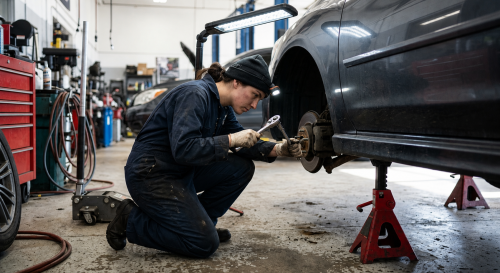
Mechanic torque-checking anchor bolts on a 2-post car lift column base
Lift-Type-Specific Failure Points You Shouldn't Ignore
Different lift designs fail in different ways. Generic checklists miss this — your inspection routine should match the equipment.
2-post lifts
Highest-risk failure: arm restraint disengagement combined with off-center loading. Always check restraint gears, arm pin wear, and pad height adjustment threads. See our 2-post vs 4-post comparison guide if you're weighing a replacement.
4-post lifts
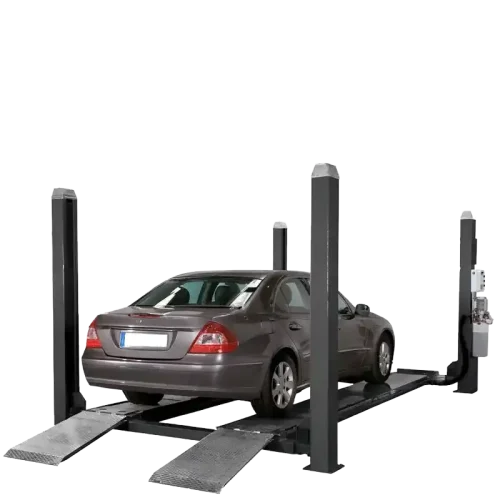
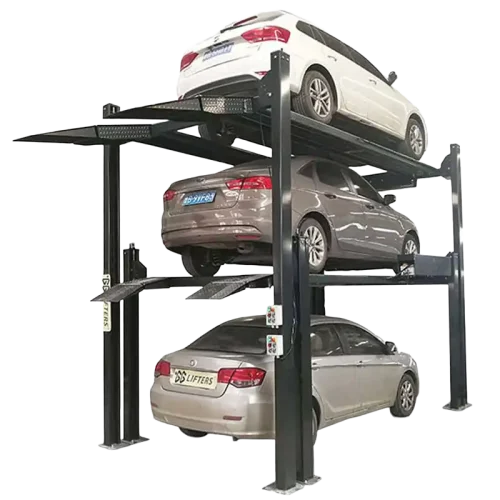
Highest-risk failure: cable stretch leading to runway misalignment. Cables on 4-post lifts carry the entire load and require regular tension equalization. Inspect all four cables monthly and replace as a complete set, never individually.
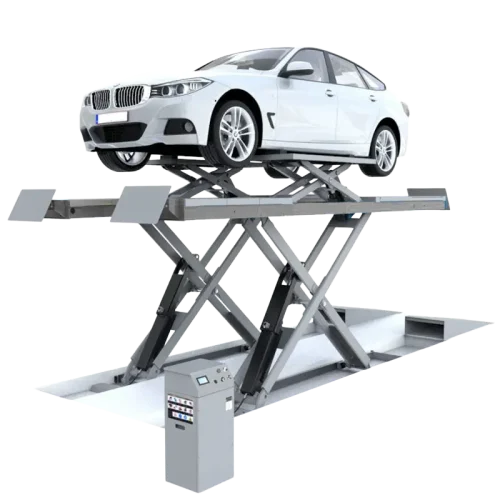
Scissor and mid-rise lifts
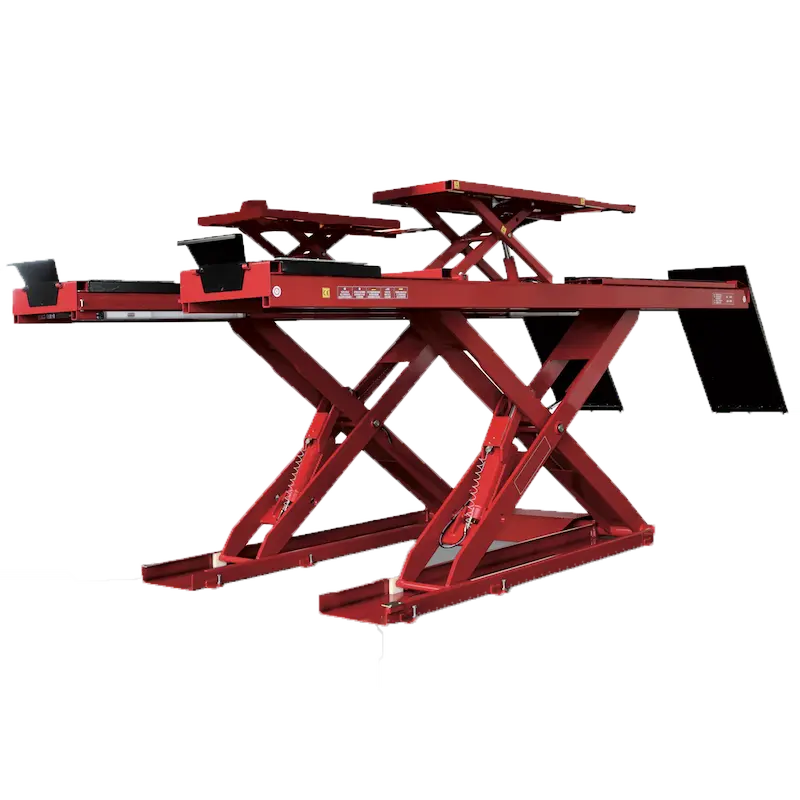
Highest-risk failure: pivot pin wear and hydraulic cylinder side-load damage. The geometry of scissor lifts puts cyclical stress on pins that aren't easy to see. Lubricate per spec and watch for any side-to-side play in the platform.
Heavy-duty truck lifts
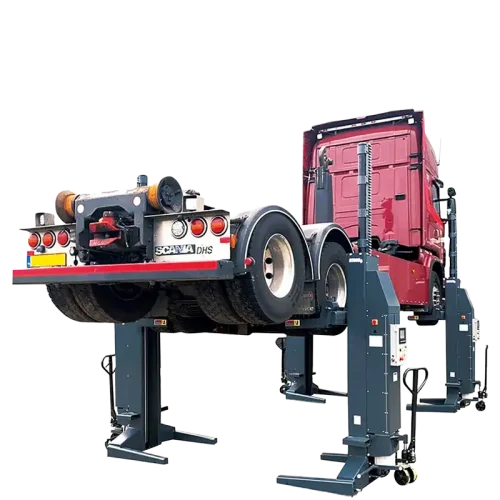
For column lifts and mobile heavy-duty systems, synchronization between columns is critical. A 5cm height difference across a fully loaded bus is a tipping event. Our truck and bus lift guide covers selection, but the inspection priorities — sync cables or wireless sync diagnostics, individual lock engagement, battery condition on mobile units — are non-negotiable.
Hydraulic Fluid: The Most Underrated Inspection Item
If you only improve one thing in your maintenance program, make it hydraulic fluid management. Contaminated or wrong-spec fluid is responsible for more cylinder failures than mechanical wear.
What goes wrong
Water contamination: Causes milky fluid appearance and pits cylinder bores from inside
Particulate contamination: Scores cylinder walls and accelerates seal failure
Wrong viscosity: Causes slow lift on cold mornings, foaming, and pump cavitation
Mixed fluids: Degrades anti-wear additives and softens seals
What to do
Change hydraulic fluid every 2–3 years or 1,000 operating hours, whichever comes first. Use only the manufacturer-specified ISO grade — usually ISO 32 or ISO 46 anti-wear hydraulic oil. Replace the suction filter at every fluid change. And keep the reservoir cap sealed: a workshop is a dusty environment, and that breather is the front door for contamination.
A practical tip: keep a clear glass jar in the shop. When you sample fluid, pour it in the jar and let it sit for 24 hours. Cloudiness, separation, or visible particles tell you everything you need to know without sending it to a lab.
Documentation: The Part Everyone Skips (And Shouldn't)
An inspection that isn't written down didn't happen. That's not a slogan — that's how courts, insurers, and OSHA inspectors see it after an incident.
Every lift in your shop should have its own logbook or digital record containing:
Lift make, model, serial number, capacity, and installation date
Daily pre-use checks (initials and date are enough)
Monthly inspection findings and corrective actions
All repair work, including parts replaced and technician name
Annual certified inspection reports and ALI labels
Manufacturer recall notices and how they were addressed
Digital tools make this easier than ever. A simple shared spreadsheet, a maintenance app, or even a clipboard on each column works. The format doesn't matter. Consistency does. When the insurance adjuster asks for records after an incident, “we usually do that” is a six-figure mistake.
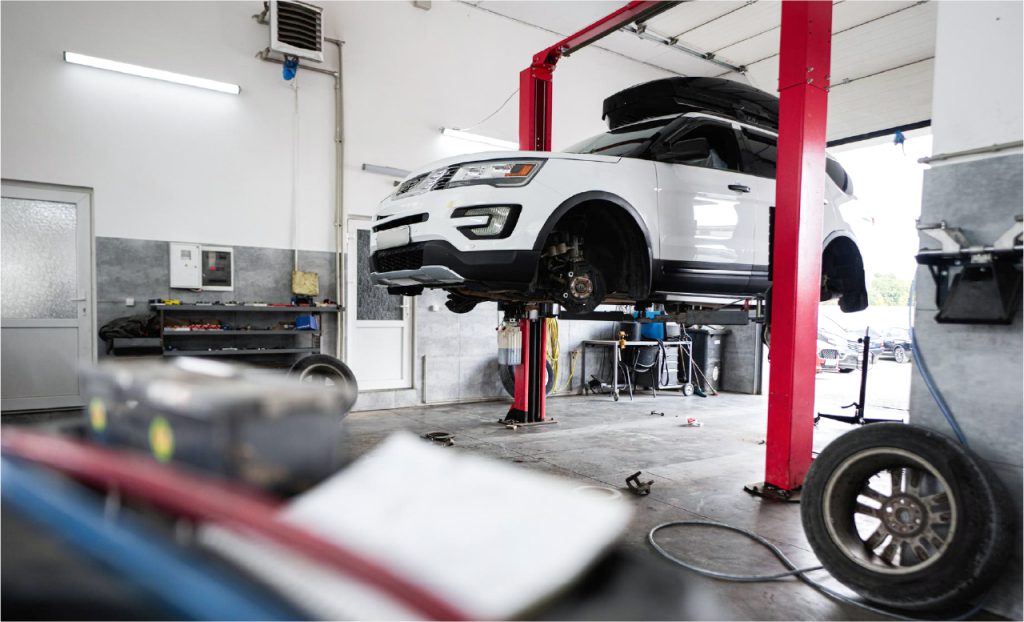
Four-post car lift showing safety lock mechanisms in a modern workshop
Training: The Multiplier on Every Inspection Program
Even the best inspection checklist fails if the people using it don't know what they're looking at. Lift safety training should cover three areas:
Loading technique
Center of gravity, pad placement, asymmetric loading, and weight distribution. A technician who places pads on a unibody pinch weld instead of a manufacturer-designated lift point can damage a $60,000 vehicle even on a perfectly maintained lift.
Safety lock discipline
The hydraulic system holds the load while raising and lowering. The mechanical safety locks hold it during work. Every technician must know: never work on a vehicle that isn't sitting on its locks. The hydraulic seal can fail. The locks can't.
Recognition of warning signs
Strange noises, unusual movement, slow drift, sticky locks, fluid weeping. Train your team to stop the lift and report — not to push through. The cultural shift from “don't bother the boss” to “tell me immediately” is what actually prevents accidents.
If you're building or upgrading a shop, training fits naturally into broader planning. Our workshop setup guide covers how lift placement, clearance, and traffic flow interact with safety practices.
When to Repair, When to Replace
Hydraulic lifts are durable. A well-maintained 2-post lift can run 20+ years. But there's a point where ongoing repairs become a false economy and a safety liability.
Replace rather than repair when you see any of these:
Structural cracks in columns, arms, or runways (welded repairs are not acceptable on load-bearing structure)
Bent or twisted columns from impact damage
Cylinder bore scoring deep enough to feel with a fingernail
Multiple safety system failures within a 12-month period
Missing or illegible capacity plate and serial number — you can't certify what you can't identify
Manufacturer no longer supplies replacement parts
If a lift fails its annual certified inspection, get a written estimate for repairs and compare it to a new unit. When repairs exceed 40–50% of replacement cost, replacement almost always wins on safety, productivity, and warranty terms. Proper lift dimensions and clearance planning matter here too — a replacement is also a chance to upgrade capacity or fit if your vehicle mix has shifted.
Build the Routine, Protect the Shop
The summary is short because the principle is simple. Daily 2-minute walk-arounds catch the obvious. Monthly hands-on inspections catch the developing. Annual certified inspections catch the structural. Documentation protects you legally. Training makes all of it actually work. Skip any layer and you're trusting luck — which is the one component no hydraulic lift comes with.
If you're sourcing new lifts, replacing aging equipment, or building a complete shop from scratch, WSA Tools / Winsen supplies inspection-friendly hydraulic lifts and full workshop packages to distributors, repair shops, and tire centers worldwide. Browse our workshop equipment catalog or contact our team for specifications, certifications, and bulk pricing tailored to your market.
Yes. We provide OEM and ODM services, including logo printing, custom colors, packaging design, and product specification adjustments. Available options depend on the product type and order quantity.
What is your minimum order quantity (MOQ)?
MOQ requirements vary by product. Most standard products are available in flexible quantities, while customized branding, packaging, or product development may require a minimum order. Contact us with the product model and required quantity for confirmation.
Do you offer samples?
Samples or trial orders are available for most product categories. Sample charges and refund terms depend on the selected product and will be confirmed before ordering.
Which ports do you ship from?
We can arrange shipment from major ports in China, including Shanghai, Ningbo, Shenzhen, and Qingdao. The final port will be selected according to the product location and shipping arrangement.
Which trade terms do you support?
We support EXW, FOB, CIF, and other standard international trade terms. The available option will be confirmed in your quotation based on the order and destination.
Can you supply products beyond your catalog?
Yes. If you cannot find the required automotive tool or workshop equipment in our catalog, send us your specifications, target quantity, and application. Our team can help identify and source a suitable solution.