Why Your Shop Keeps Losing Money on Grease and Oil: Lubrication Equipment Mistakes to Avoid
Your shop is likely losing money on lubrication work for three reasons: too much grease per job, too much labor time per job, and equipment that can't keep up with your daily vehicle count. None of these show up as a separate expense on your books — they hide inside labor hours and consumable costs, quietly eating margin on every single lube job. Fix the equipment, and the waste disappears almost overnight.
The Hidden Cost Nobody Tracks: Grease Waste
Ask any shop owner how much grease they use per month and most will shrug. That's the problem. Grease is treated like a throwaway consumable, when in reality it's a controllable cost — just like brake pads or filters.
A standard manual grease gun applies roughly 1-3 grams per pump stroke, but technicians rarely stop at the exact amount a fitting needs. Over-greasing is the default habit because under-greasing risks a comeback. Multiply that overage across 15-20 lube points per vehicle, and across 10-15 vehicles a day, and you're looking at pails of wasted grease every month — grease you paid for and threw on the floor, not on the truck.
A Simple Math Check
If a shop overuses grease by even 20% per job, and grease costs $6-9 per cartridge, that's real money bleeding out weekly. It's not dramatic on any single ticket. It's dramatic over a year.
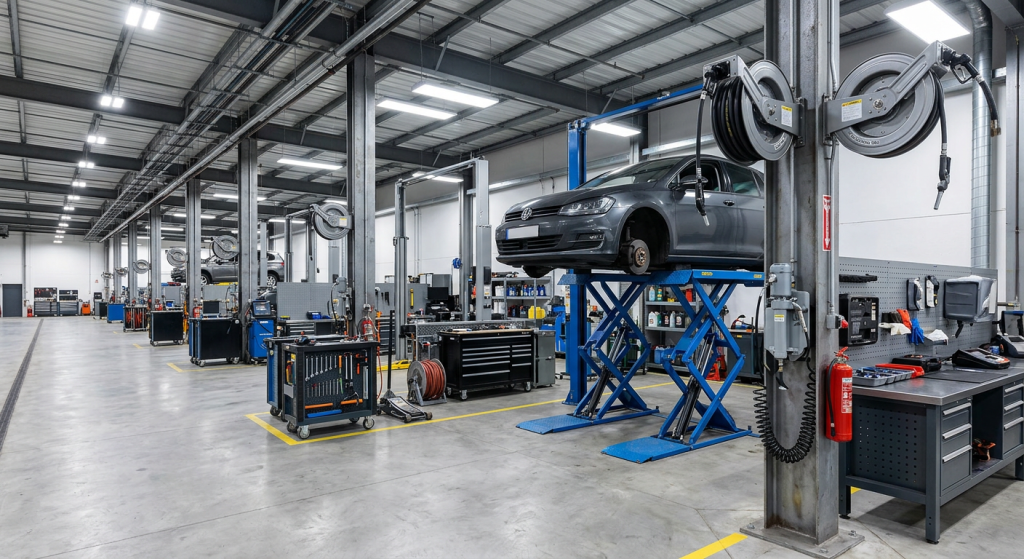
Mechanic applying grease to a vehicle chassis fitting using a pneumatic grease gun
Mistake #1: Using Manual Tools for High-Volume Work
A manual grease gun is fine for a hobby garage. It's a bottleneck in a shop doing more than five lube jobs a day.
Here's the real issue: manual pumping is slow, inconsistent, and physically tiring. Techs get lazy on high-point-count jobs — trucks with 20+ grease fittings — and start skipping points or under-filling to save time and effort. That's a safety and comeback risk disguised as a productivity shortcut.
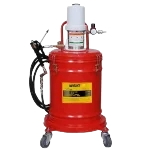
For instance, a fleet maintenance garage servicing box trucks and delivery vans found that switching from manual guns to an air-operated grease pump cut average chassis lube time from 12 minutes to under 4 minutes per vehicle. That's not a small gain — that's an extra 2-3 vehicles through the bay every day with the same labor.
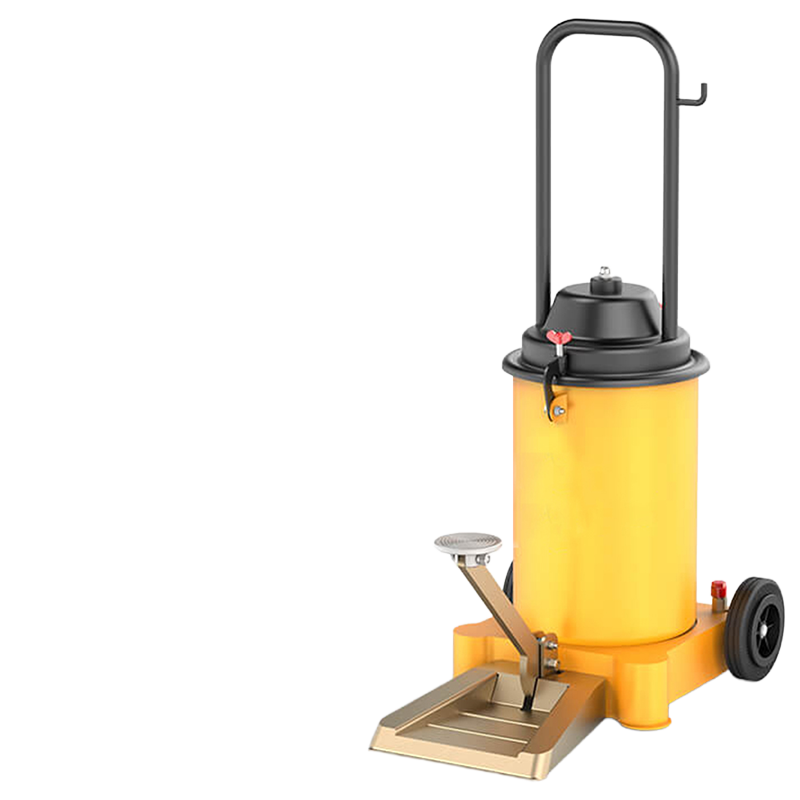
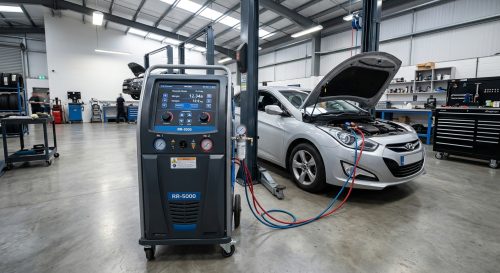
Air-operated grease pump mounted on a barrel in a busy automotive workshop
Mistake #2: Buying the Wrong Pump for Your Volume
Bigger isn't always better, and this is where a lot of shops overspend without gaining anything. An electric grease system with digital metering makes sense for a fleet shop pushing 20+ vehicles a day. For a five-bay independent shop doing 6-8 lubes daily, that same system is overkill — and the extra cost never gets recovered.
The comparison table above breaks down where each system actually earns its keep. The rule of thumb: match pump type to daily volume, not to what looks impressive in the bay.
Signs You've Outgrown Manual Tools
Techs are visibly skipping fittings to save time
Grease inventory disappears faster than job count justifies
Customers wait longer for routine service than for actual repairs
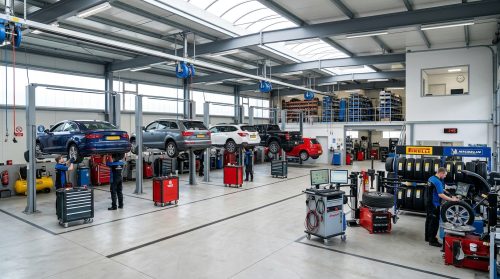
Comparison of manual, air-operated, and electric grease systems in a workshop setting
Mistake #3: Ignoring Oil Dispensing Efficiency
Lubrication mistakes aren't just about grease. Oil changes suffer the same waste problem, just less visibly. Pouring from bulk containers by hand causes spillage, overfilling, and inaccurate measurement — all of which cost money and create cleanup time nobody bills for.
A metered oil control valve or reel-mounted dispensing system pays for itself fast in shops doing high oil-change volume. Accurate dispensing to the quart or liter means no overfill waste, no guesswork, and faster paperwork since the volume is already logged.
This matters even more in shops handling mixed fluid types — synthetic, conventional, diesel-rated oils — where cross-contamination from shared funnels or containers leads to warranty issues down the line.
Metered oil dispensing reel system mounted near a workshop service bay
Mistake #4: Skipping Maintenance on Lubrication Equipment Itself
Ironic, but true — the equipment meant to keep vehicles running smoothly often gets zero maintenance itself. Grease pump seals dry out. Hoses crack. Metering valves drift out of calibration. None of this fails suddenly; it degrades slowly, and shops don't notice until waste creeps back up or a hose blows mid-job.
A basic monthly check — seal condition, hose integrity, pressure output, valve accuracy — takes 15 minutes and prevents most failures. Compare that to the downtime of a burst hose spraying grease across a lift bay during a rushed appointment.
Regularly inspect grease pumps, oil pumps, hoses, reels, couplers and seals for leaks, wear, pressure loss or contamination. For help selecting a system that matches your workload and maintenance requirements, see our workshop grease pump comparison guide.
Mistake #5: Poor Bay Layout Around Lubrication Stations
Even the best pump underperforms if it's positioned wrong. Shops often place grease and oil stations too far from the lift, forcing techs to walk hoses across the bay or drag carts around vehicles. That's wasted minutes multiplied across every job, every day.
When planning or renovating a bay, lubrication equipment should sit within arm's reach of the lift's typical work zone — not tucked in a corner because that's where the wall outlet happened to be. If you're setting up a new shop or reworking floor space, this is exactly the kind of detail covered in a proper workshop layout and space planning guide — lubrication stations deserve the same layout attention as lifts and tool carts.
How to Calculate Your Real Lubrication Cost Per Vehicle
Most shops price lube jobs as a flat rate without ever checking whether that rate reflects actual cost. Here's a quick way to find out: take your monthly grease and oil consumable spend, divide by vehicles serviced, and compare that to what you're charging.
If the gap is smaller than expected — or worse, negative — your equipment is likely the culprit, not your pricing. Upgrading dispensing accuracy fixes the cost side without needing to raise prices and risk losing customers.
Quick Reference
Shops that switch from manual to air or electric grease systems typically report 15-30% reduction in grease consumables within the first quarter, based on metered application alone.
Yes. We provide OEM and ODM services, including logo printing, custom colors, packaging design, and product specification adjustments. Available options depend on the product type and order quantity.
What is your minimum order quantity (MOQ)?
MOQ requirements vary by product. Most standard products are available in flexible quantities, while customized branding, packaging, or product development may require a minimum order. Contact us with the product model and required quantity for confirmation.
Do you offer samples?
Samples or trial orders are available for most product categories. Sample charges and refund terms depend on the selected product and will be confirmed before ordering.
Which ports do you ship from?
We can arrange shipment from major ports in China, including Shanghai, Ningbo, Shenzhen, and Qingdao. The final port will be selected according to the product location and shipping arrangement.
Which trade terms do you support?
We support EXW, FOB, CIF, and other standard international trade terms. The available option will be confirmed in your quotation based on the order and destination.
Can you supply products beyond your catalog?
Yes. If you cannot find the required automotive tool or workshop equipment in our catalog, send us your specifications, target quantity, and application. Our team can help identify and source a suitable solution.