Jack Stands vs Car Ramps: Which One Actually Belongs Under a Vehicle?
Jack stands belong under a vehicle when you need to work underneath it — brakes, suspension, exhaust, driveline. Car ramps belong under the wheels when you just need clearance for a quick job like an oil change or a visual inspection. They are not competing products; they solve two different problems, and using the wrong one for the job is how shops end up with crushed oil pans or a technician pinned under a car that shifted.
The Real Difference Isn’t Height — It’s What You Can Reach
Most buyers compare jack stands and ramps on how high they lift a vehicle. That’s the wrong metric. The real difference is access. A ramp gets the front or rear wheels up in the air, but the wheels themselves — and everything directly above them — stay blocked by the ramp structure. Jack stands, placed at the frame or pinch weld, leave the entire underside open.
If a technician needs to pull a wheel, drop a control arm, or replace an exhaust hanger, a ramp simply won’t let them get there. Jack stands will. This is why shops doing suspension and brake work almost always reach for stands, while quick-lube bays run heavily on ramps.
Where Jack Stands Win: Brake, Suspension, and Undercarriage Jobs
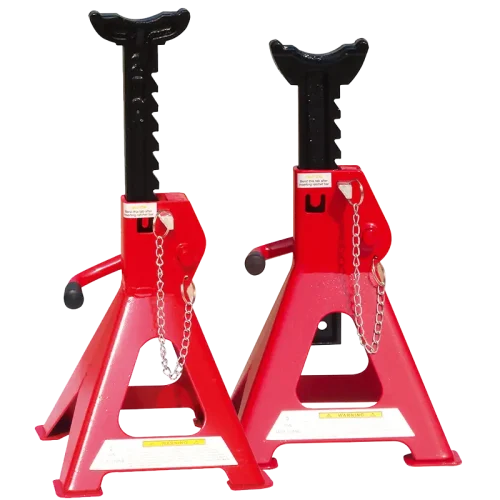
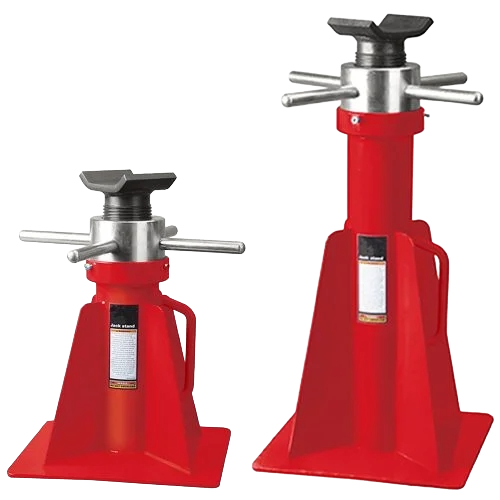
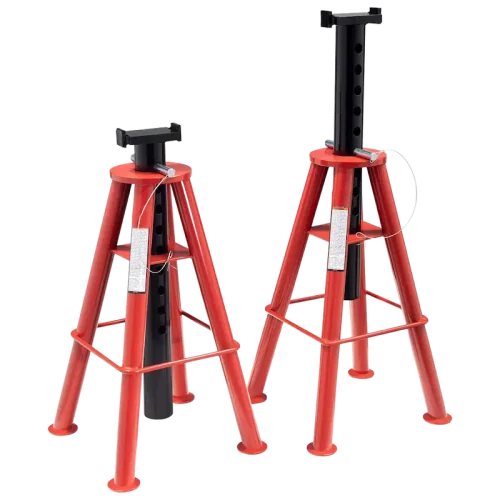
Jack stands are the only sensible choice when a wheel has to come off. Think brake pad replacement, rotor swaps, CV joint work, or exhaust repair — all of these require the wheel out of the way and clear access to the hub, control arms, or subframe.
Load rating matters more than people think
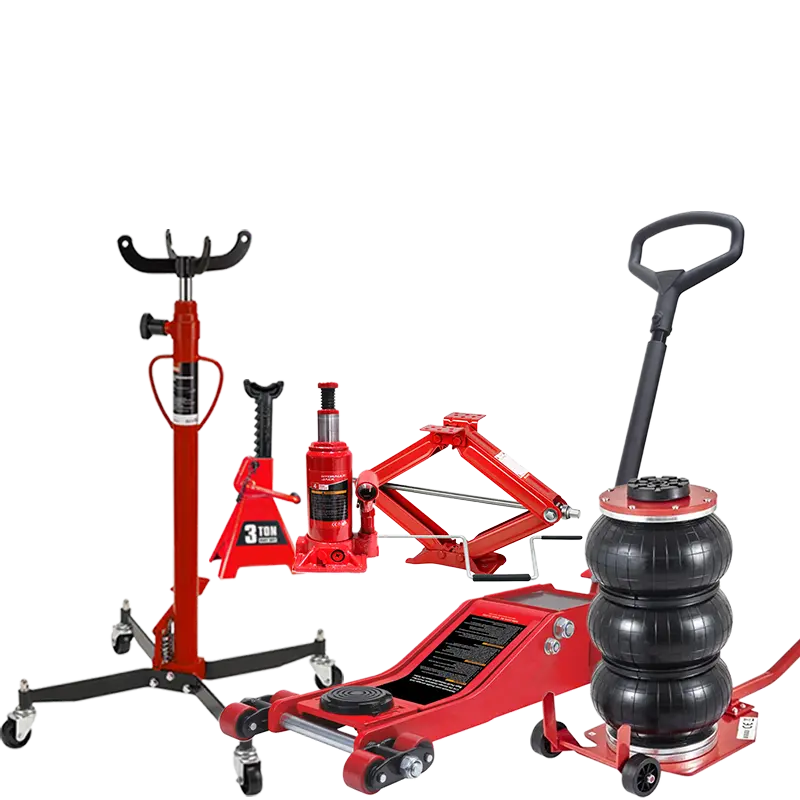
A pair of 3-ton stands is fine for compact sedans, but a 6-ton pair is the safer baseline for pickups, SUVs, and light commercial vans once you add the shop’s actual working margin. Buying undersized stands to save money is one of the most common mistakes we see — it’s covered in detail in Jack Stand Safety Ratings Explained and in the draft comparison of 3 Ton vs 6 Ton Jack Stands capacity selection.
For example, a fleet maintenance garage servicing delivery vans switched from 3-ton to 6-ton stands after one van’s loaded rear axle exceeded the stand’s rating during a suspension bushing job. Nothing failed that day, but the margin was too thin for comfort — and that’s the point of rating headroom.
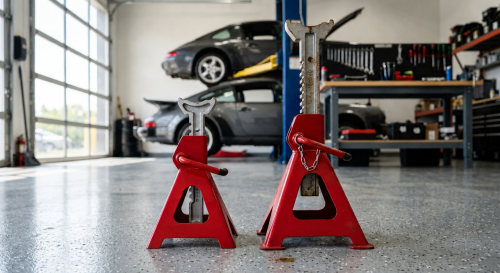
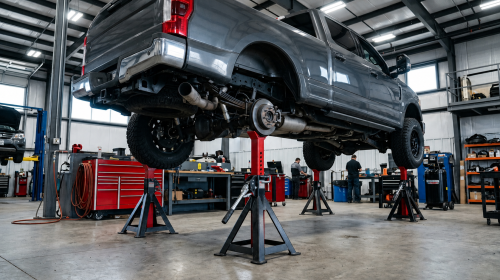
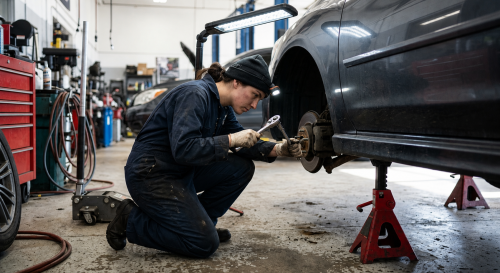
Jack stands supporting a car with wheel removed for brake service
Where Ramps Win: Speed for Routine, Low-Risk Jobs
Ramps exist for one reason: speed. Drive up, set the parking brake, done. No jacking, no positioning stands, no lowering the vehicle back down afterward. For oil changes, fluid checks, or a quick visual inspection of the underbody, that speed matters — especially in a high-volume quick-service bay running ten to fifteen cars a day.
The tradeoff is access. You can change oil and check the belt from underneath, but you can’t pull a wheel or work on the suspension while the vehicle sits on ramps. Shops that try to stretch ramps beyond their intended job end up fighting the equipment instead of the repair.
The Failure Modes Nobody Talks About
Every piece of vehicle support equipment fails in its own way, and knowing the failure mode changes how you use it.
Jack stands: tip-over, not collapse
A quality jack stand rarely collapses outright — it tips when the vehicle isn’t level, when the stand sits on an uneven or soft surface, or when it’s placed off the vehicle’s rated lift point. That’s a stability failure, not a strength failure, and it’s why floor condition matters as much as the stand’s tonnage rating.
Ramps: roll-off, not structural failure
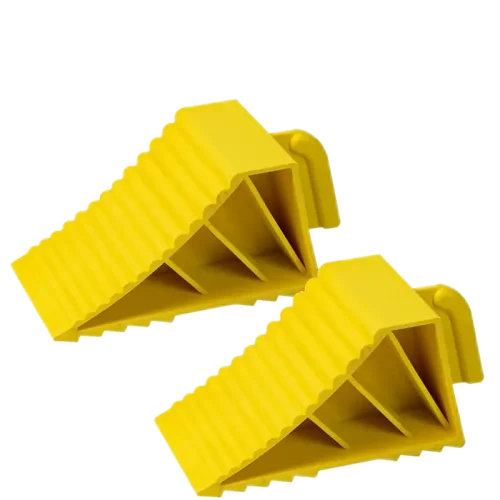
Ramps fail differently — a vehicle rolls backward off the ramp because the parking brake wasn’t set or wheel chocks weren’t used on the opposite end. The ramp itself rarely bends or cracks under rated load; the failure is almost always a setup mistake, not an equipment defect.
Both failure types are preventable with routine checks — see the inspection habits shops should build into every shift, even if that specific checklist is still being finalized internally.
Never Use Either as a Substitute for a Lift — Or for Each Other
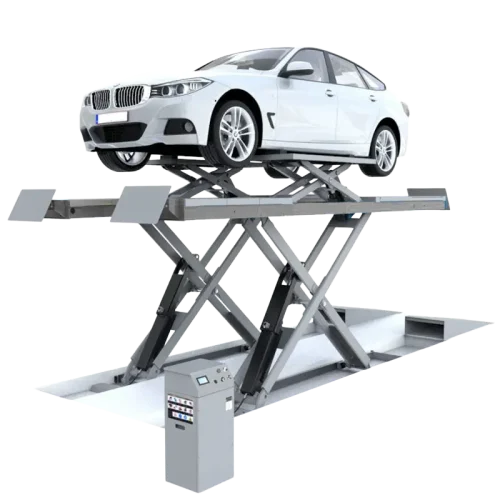
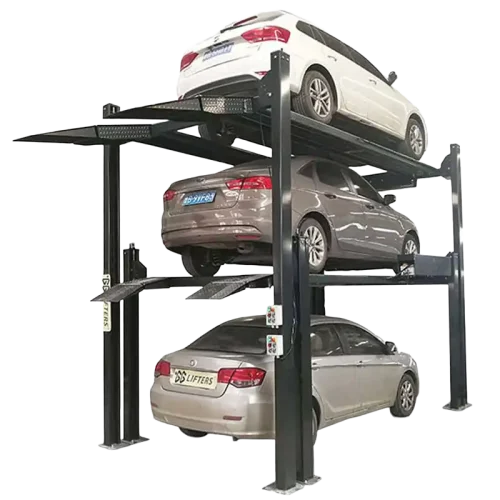
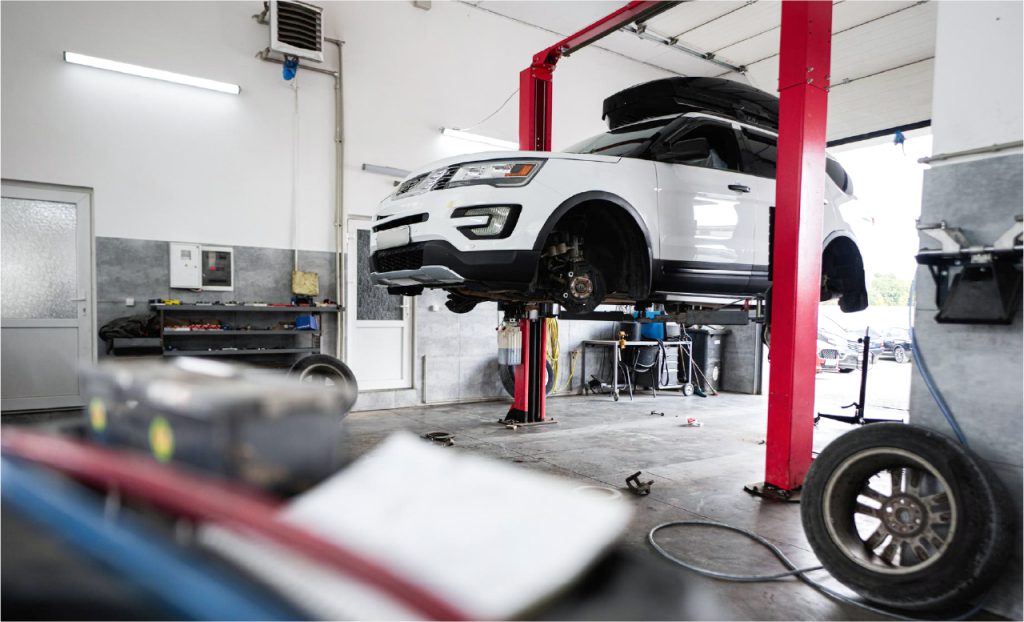
Here’s a hard rule that gets ignored more than it should: jack stands and ramps are support equipment, not primary lifting equipment. Neither replaces a two-post or four-post lift for jobs that involve extended time underneath a vehicle, heavy component removal, or repeated daily use.
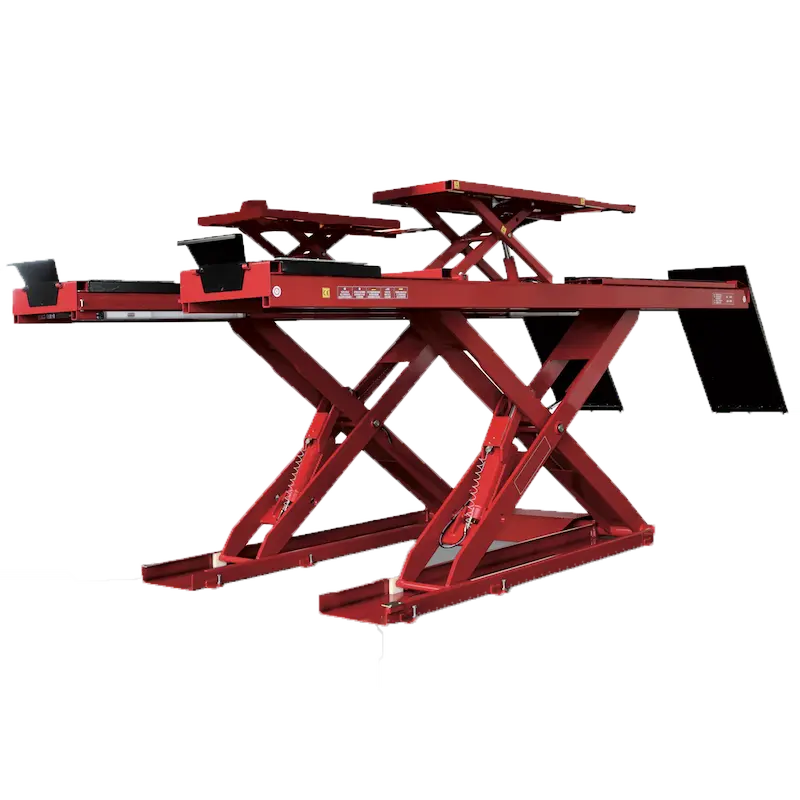
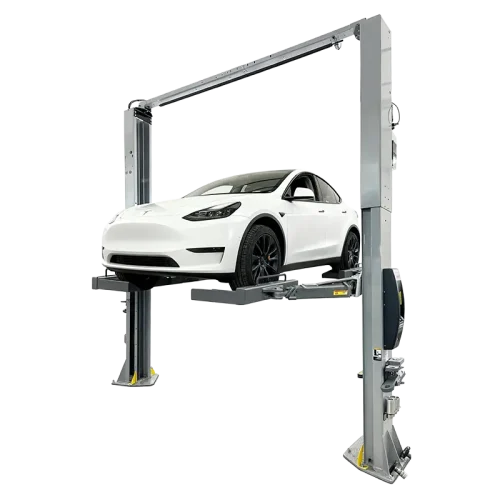
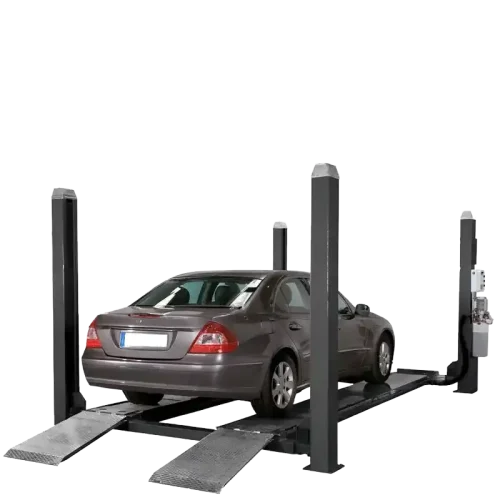
A shop doing five brake jobs a day on stands is burning labor hours that a proper lift would cut in half. If your volume has grown past occasional stand-supported work, it’s worth reviewing 2 Post Lift vs 4 Post Lift guidance to see where the crossover point makes financial sense.
Capacity Math: Why ‘Rated for the Car’ Isn’t Enough
A stand or ramp pair rated at 6 tons total doesn’t mean 3 tons per side automatically covers your vehicle. Weight distribution matters. Front-engine vehicles put 55–60% of curb weight over the front axle; a stand pair supporting just the rear needs far less capacity than one supporting the front.
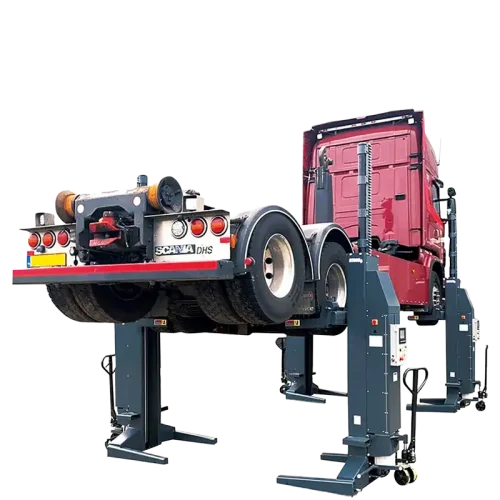
Always rate equipment to the axle weight it will actually carry, not just the vehicle’s total curb weight divided evenly. This is the same principle used when sizing heavy-duty lifts for trucks and buses — axle-specific load, not vehicle average.
Close-up of jack stand contact point at vehicle frame rail
Storage, Space, and Daily Workflow
Ramps take up more floor space when not in use — they’re bulky, awkward to stack, and often get left in a corner where they become a tripping hazard. Jack stands nest and stack cleanly, which matters more than it sounds in a tight bay.
If your shop layout is already tight, this is worth factoring in alongside the broader planning covered in How to Set Up a Professional Automotive Workshop. Equipment that’s hard to store tends to get used less carefully — and stored equipment that’s in the way gets damaged.
The Verdict: Stock Both, But for Different Reasons
A well-run shop doesn’t choose one over the other — it stocks both and trains staff on when each one applies. Ramps for quick, low-access jobs. Jack stands for anything involving wheels off, suspension, or undercarriage work. Treating them as interchangeable is where shops get hurt or waste labor hours fighting the wrong tool.
Yes. We provide OEM and ODM services, including logo printing, custom colors, packaging design, and product specification adjustments. Available options depend on the product type and order quantity.
What is your minimum order quantity (MOQ)?
MOQ requirements vary by product. Most standard products are available in flexible quantities, while customized branding, packaging, or product development may require a minimum order. Contact us with the product model and required quantity for confirmation.
Do you offer samples?
Samples or trial orders are available for most product categories. Sample charges and refund terms depend on the selected product and will be confirmed before ordering.
Which ports do you ship from?
We can arrange shipment from major ports in China, including Shanghai, Ningbo, Shenzhen, and Qingdao. The final port will be selected according to the product location and shipping arrangement.
Which trade terms do you support?
We support EXW, FOB, CIF, and other standard international trade terms. The available option will be confirmed in your quotation based on the order and destination.
Can you supply products beyond your catalog?
Yes. If you cannot find the required automotive tool or workshop equipment in our catalog, send us your specifications, target quantity, and application. Our team can help identify and source a suitable solution.