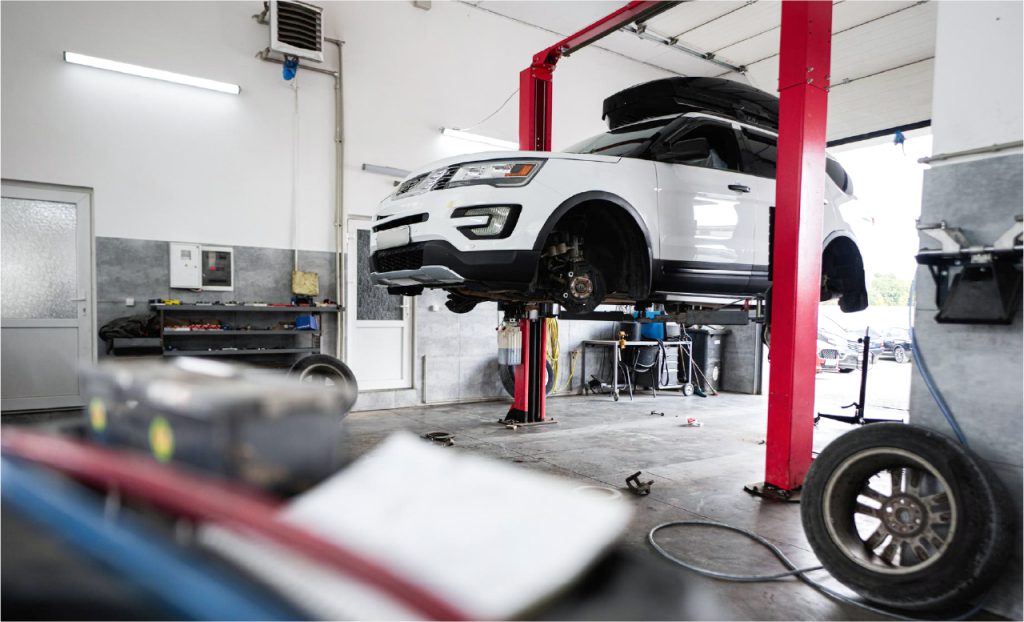
Hydraulic Jack Capacity Explained: Why 3-Ton Isn’t Always Enough
A 3-ton hydraulic jack only lifts 3 tons under perfect conditions — and most workshop conditions are far from perfect. Browse the full capacity range at Winsen, a trusted hydraulic jack supplier, to spec the right jack for your application. Once you account for off-center loading, worn seals, sloped floors, and the simple fact that you're often lifting one corner of a vehicle that weighs more than the jack's rated total, that 3-ton number shrinks fast. For any shop servicing SUVs, pickups, or loaded vans, a 3-ton floor jack sits right at the edge of safe — and edges are where accidents happen.
What “Rated Capacity” Actually Means
Rated capacity is the maximum static load a jack can lift at its lowest saddle position under laboratory test conditions. It is not a working load. ANSI/ASME PALD standards typically require jacks to be proof-tested at 150% of rated capacity, but that proof test is destructive in intent — it confirms the unit won't catastrophically fail, not that you should operate near it.
In practice, professionals treat rated capacity as a ceiling and operate at 60–75% of it. A 3-ton jack used at 75% gives you about 2.25 tons of usable working load. That's fine for a compact sedan corner. It's tight for a loaded Toyota Hilux. It's dangerous for a Ford F-150 with a full bed.
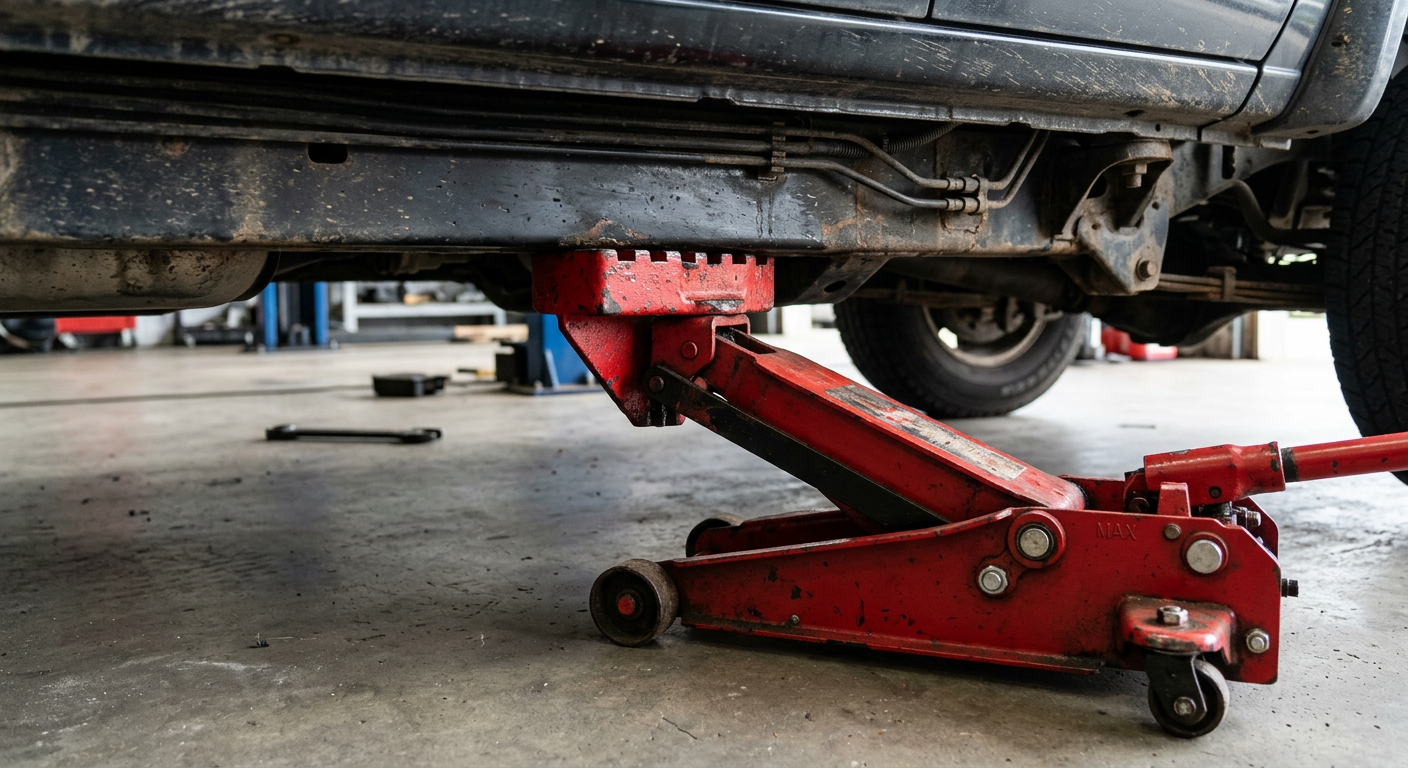
Close-up of a hydraulic floor jack saddle under a vehicle frame
The Math: Why One Corner Isn't One-Quarter of the Vehicle
Here's the mistake that sinks most jack selections: assuming a 2,400 kg vehicle puts 600 kg on each corner. It doesn't.
Weight distribution on most front-engine passenger vehicles is roughly 60/40 front-to-rear. On a pickup with a loaded bed it can shift to 40/60 or worse. On a transverse-engine SUV with a full fuel tank and roof rack, one front corner can carry 35–40% of the entire vehicle's mass.
2,400 kg vehicle, even distribution: 600 kg per corner
2,400 kg vehicle, 38% front-left load: 912 kg on that corner
Lifting from a single mid-frame point: up to 60% of total weight = 1,440 kg
Now add a passenger you forgot to ask out of the cab, tools in the back, or a half-tank of fuel weighing 30+ kg, and the actual load climbs further. A 3-ton (3,000 kg) jack still handles it — but you've burned through most of your safety margin before the wheels even leave the ground.
Vehicle weight distribution diagram showing corner load percentages
When 3-Ton Is Genuinely Enough
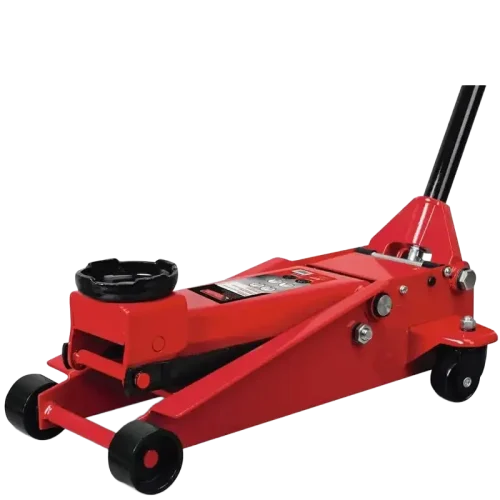
To be fair, the 3-ton floor jack remains the workhorse of independent garages for a reason. For passenger sedans, hatchbacks, compact crossovers, and most front-wheel-drive vehicles under 1,800 kg curb weight, a quality 3-ton unit gives you comfortable margin and a reasonable lift height (usually 385–500 mm).
For example, a small urban service shop handling Toyota Corollas, Honda Civics, Nissan Sentras, and the occasional CR-V can run a single 3-ton long-chassis jack for 90% of jobs without ever feeling stretched. The remaining 10% — the customer who shows up in a Tundra — is where trouble starts if you don't have a backup.
Where 3-Ton Starts to Fail
The real-world failure modes aren't usually catastrophic ruptures. They're slower and sneakier:
Seal creep under sustained load
Operating a hydraulic jack near its rated capacity accelerates seal wear and allows slow pressure bleed. The vehicle settles 5–10 mm over 20 minutes. If you're under it, that's a problem.
Pump effort and operator fatigue
A 3-ton jack lifting 2.8 tons takes significantly more pump strokes and force per stroke than the same jack lifting 1.5 tons. Mechanics start cutting corners — fewer jack stand adjustments, faster releases, sloppy positioning.
Saddle deformation
Sustained near-max loads will mushroom or crack the saddle over months of use, especially on cheaper jacks with mild-steel saddles instead of forged or ductile iron.
Frame flex on long-chassis units
Long-frame floor jacks gain reach but lose rigidity at the limit. You'll see the side rails bow visibly at 90% load — a clear sign you've outgrown the tool.
Worn hydraulic jack saddle compared to new saddle on workshop bench
Matching Jack Capacity to Vehicle Class
Use this as a planning baseline, not a hard rule. Always check the specific vehicle's curb weight and front-axle load.
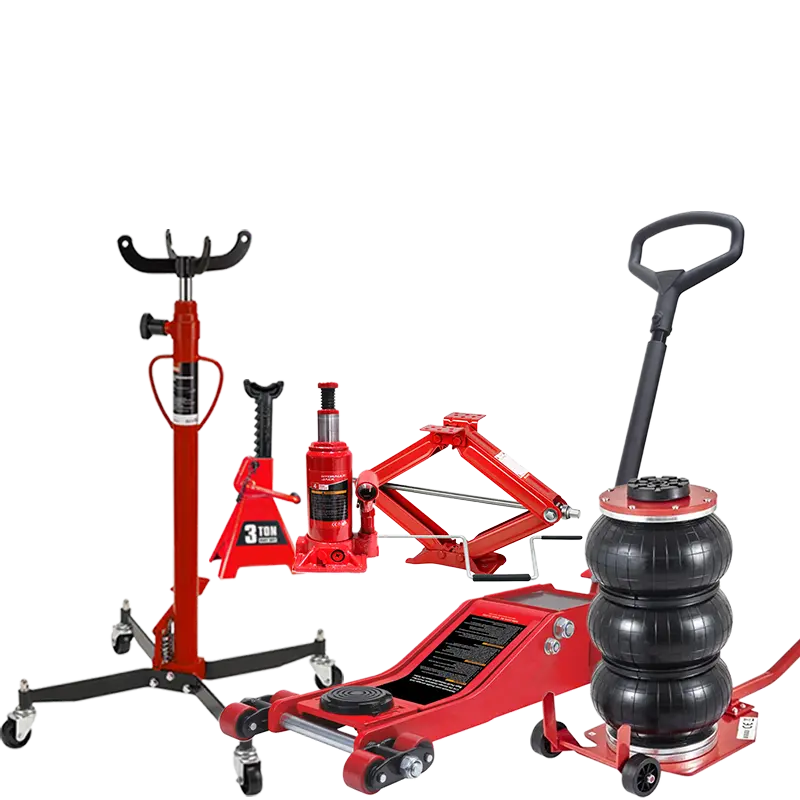
2-ton jack: Subcompacts and compact cars under 1,400 kg. Useful as a secondary or mobile jack only.
3-ton jack: Midsize sedans, small SUVs, light hatchbacks up to ~1,900 kg curb weight.
5-ton jack: Full-size SUVs, half-ton pickups, midsize vans. This is the realistic default for shops that see mixed traffic.
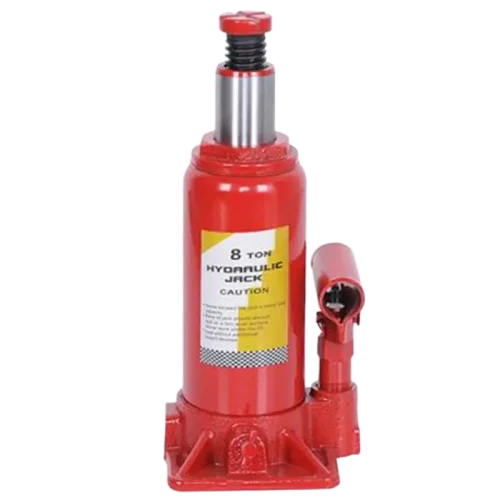
10-ton bottle jack: 1-ton pickups, light commercial trucks, frame work where reach matters more than wheel arch clearance.
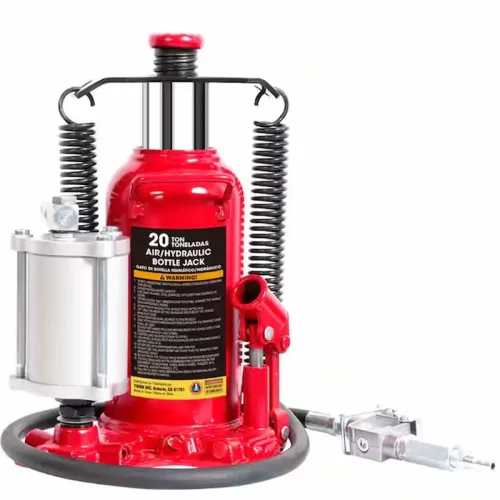
20-ton+ air/hydraulic: Light/medium trucks and bus chassis. See our truck and bus lift guide for matched lifting strategies.
For instance, a tire shop in a region with heavy pickup traffic upgraded their primary floor jack from 3-ton to 5-ton after replacing two cracked saddles in six months. The 5-ton unit cost about 40% more but eliminated the problem entirely and reduced pump-stroke counts by roughly a third on every lift.
Three hydraulic floor jacks of different capacities side by side
Lift Height, Saddle Reach, and Why Capacity Isn't the Only Number
Capacity gets the headline. But two other specs decide whether the jack is actually usable on a given vehicle:
Minimum saddle height
Modern sports cars and lowered vehicles often have ground clearance under 110 mm. A standard 3-ton jack with a 145 mm collapsed height physically won't fit. You need a low-profile unit — typically 75–95 mm collapsed.
Maximum lift height
Tall SUVs and trucks need 500–600 mm of lift to get a wheel off the ground with suspension droop. A bargain 3-ton jack with 385 mm max lift will leave you spinning the wheel against the ground on an F-150.
Chassis length and reach
Lift points on long-wheelbase vehicles can sit 600+ mm from the rocker. A short-frame jack can't physically reach a center lift point on a long-bed truck without rolling at an awkward angle.
A 10-ton bottle jack and a 10-ton floor jack are not interchangeable, even though the rating matches.
Bottle jacks deliver more vertical force per unit weight and footprint — a 10-ton bottle jack weighs about 12 kg, while a 10-ton floor jack can exceed 100 kg. But bottle jacks lift vertically from a fixed base, requiring solid ground directly under the lift point. Floor jacks roll, allowing the saddle to arc toward the lift point as it rises, which keeps the load tracking naturally with the suspension geometry.
Practical rule: use bottle jacks for trucks, frame straightening rigs, and heavy stationary lifts. Use floor jacks for any wheel-off work on passenger vehicles. A well-equipped shop owns both.
Safety Factor: How Pros Actually Size a Jack
Forget “the vehicle weighs X, so I need an X jack.” The professional sizing method works backwards from the heaviest vehicle you realistically service:
Identify the heaviest vehicle in your typical customer mix (gross vehicle weight, not curb weight, if you ever lift loaded vehicles).
Calculate worst-case corner load. Multiply GVW by 0.60 to estimate the heaviest single-point load when lifting at a center frame point.
Apply a 1.5x safety factor. This accounts for seal wear, floor slope, and dynamic loading from movement.
Round up to the nearest standard jack capacity.
Example: heaviest vehicle is a 2,800 kg loaded Ford Ranger. Worst-case corner: 2,800 × 0.60 = 1,680 kg. Safety factor: 1,680 × 1.5 = 2,520 kg. Round up: 3-ton minimum, but 5-ton recommended because the calculation sits too close to the 3-ton limit for daily use.
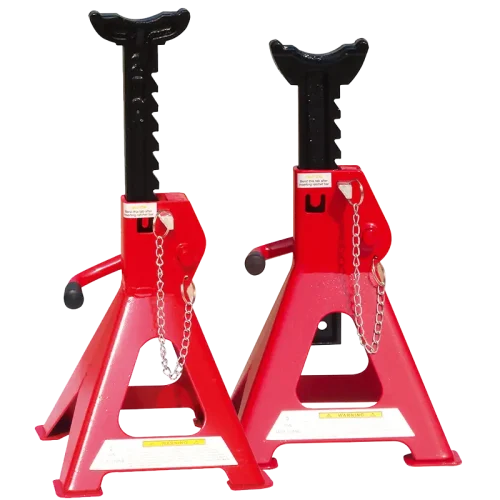
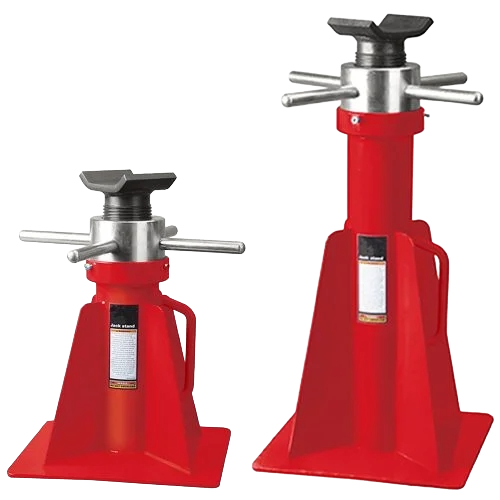
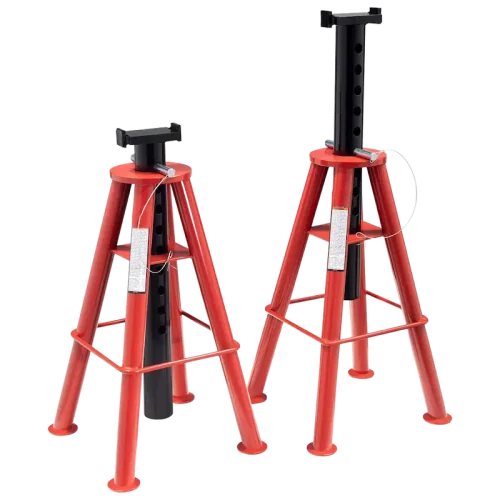
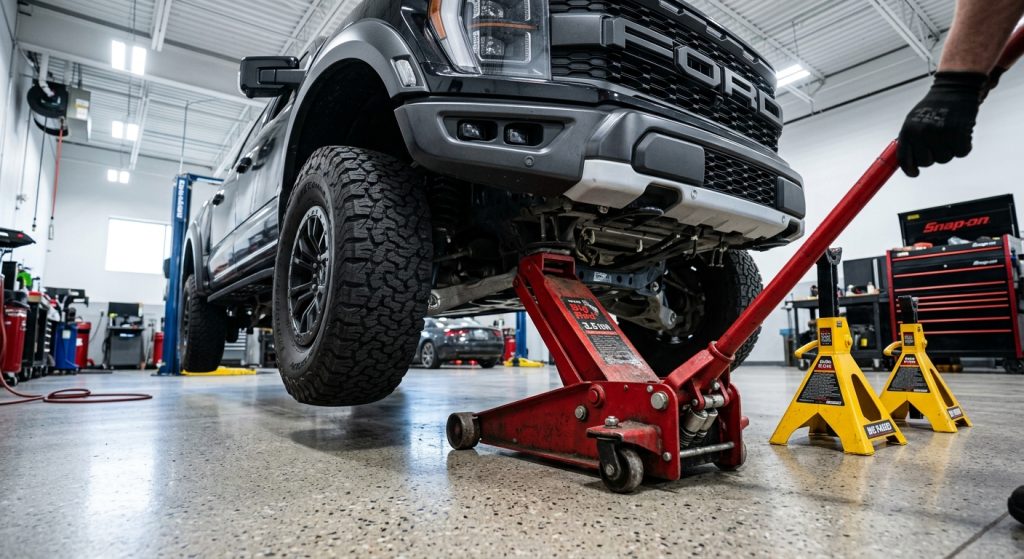
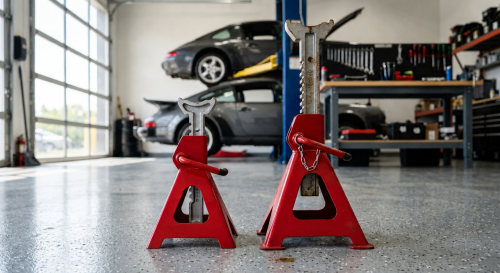
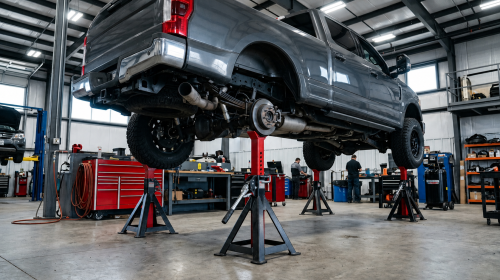
Crucially, the jack lifts the vehicle. Jack stands hold it. Never use a hydraulic jack as a support — always transfer to properly rated stands rated equal to or above the jack capacity per pair.
Hydraulic jack with jack stands supporting a pickup truck safely
Maintenance That Keeps Rated Capacity Real
A neglected 5-ton jack performs worse than a maintained 3-ton. The numbers on the label only mean something if the internals are healthy.
Hydraulic fluid: Check level every 6 months. Replace annually in heavy-use shops. Use only the specified jack oil — not motor oil, not brake fluid, not ATF.
Air bleed: Bleed the ram quarterly. Air in the system causes spongy lifts and unpredictable load holding.
Seal inspection: Check for weeping around the ram and release valve. Any visible oil film during a lift means the seal kit needs replacement.
Wheel and swivel lubrication: A floor jack that won't roll smoothly forces operators to drag loads sideways, stressing the frame.
Load test: Annually, lift a known load to 75% of capacity and hold for 10 minutes. Any drop greater than 5 mm means service time.
Sizing Your Shop's Jack Inventory
One jack isn't a strategy — it's a bottleneck. A well-equipped general repair shop typically runs three to five jacks across capacities:
One 2-ton low-profile for sports cars and lowered vehicles
Two 3-ton long-chassis for general passenger work (parallel bay use)
One 5-ton heavy-duty for SUVs and pickups
One 10-ton bottle jack for trucks and frame work
Truck-focused shops invert this — fewer floor jacks, more bottle and air/hydraulic jacks, often paired with column lifts. Tire shops emphasize speed: faster-pumping 3-ton aluminum racing jacks for car work, plus dedicated truck units.
Match your inventory to your actual customer mix, not the jack market's standard kit. The shop that buys two identical 3-ton jacks because they were on sale will eventually buy a 5-ton anyway — usually after an incident.
Choosing the Right Jack for Your Workshop
The takeaway is simple: rated capacity is a starting point, not a finish line. Calculate worst-case corner load, multiply by 1.5, and buy the jack that meets the result with margin to spare. Pair every jack with stands rated to match, maintain hydraulic fluid and seals on a fixed schedule, and stop treating the 3-ton floor jack as a universal answer — because for half the vehicles on the road today, it isn't.
Yes. We provide OEM and ODM services, including logo printing, custom colors, packaging design, and product specification adjustments. Available options depend on the product type and order quantity.
What is your minimum order quantity (MOQ)?
MOQ requirements vary by product. Most standard products are available in flexible quantities, while customized branding, packaging, or product development may require a minimum order. Contact us with the product model and required quantity for confirmation.
Do you offer samples?
Samples or trial orders are available for most product categories. Sample charges and refund terms depend on the selected product and will be confirmed before ordering.
Which ports do you ship from?
We can arrange shipment from major ports in China, including Shanghai, Ningbo, Shenzhen, and Qingdao. The final port will be selected according to the product location and shipping arrangement.
Which trade terms do you support?
We support EXW, FOB, CIF, and other standard international trade terms. The available option will be confirmed in your quotation based on the order and destination.
Can you supply products beyond your catalog?
Yes. If you cannot find the required automotive tool or workshop equipment in our catalog, send us your specifications, target quantity, and application. Our team can help identify and source a suitable solution.