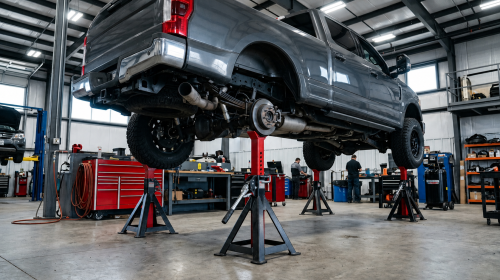
Ratchet vs Pin-Lock Jack Stands: Which Locking System Is Right for Your Shop?
Ratchet jack stands win on speed — you squeeze a handle and the column climbs or drops in seconds, which is exactly what a high-volume tire or oil-change bay needs. Pin-lock jack stands win on raw holding certainty — a solid steel pin through a drilled hole doesn't wear out the way ratchet teeth can, which is why body shops and heavy-duty fleets often prefer them for jobs that sit under a vehicle for hours. Neither system is universally 'better' — the right choice depends on how many vehicles you cycle through per day and how long each one stays up in the air.
What Actually Locks the Load — and Why It Matters
Most shop owners never look past the price tag on a jack stand. Big mistake. The locking mechanism is the only thing standing between a supported vehicle and a shop floor accident, and the two designs handle load in fundamentally different ways.
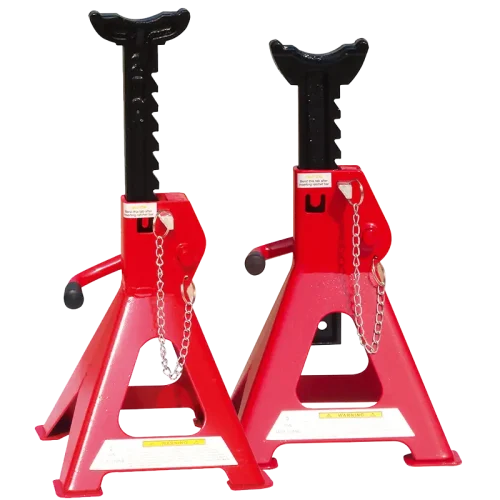
Ratchet stands use a spring-loaded ratchet bar with teeth that catch as you raise the column. It's fast and it's smooth, but the teeth are metal-on-metal contact points that take repeated shock loading every time a technician drops a car onto the stand a little too fast. Over thousands of cycles, those teeth round off.
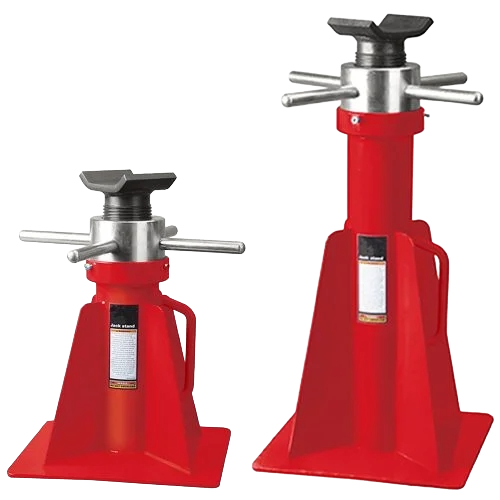
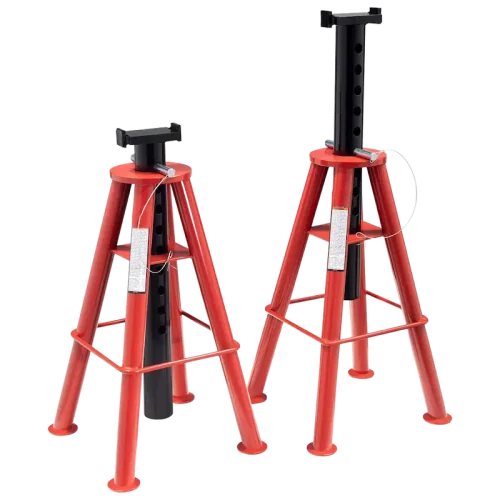
Pin-lock stands are simpler mechanically — a solid pin drops through a hole in the outer column into a matching hole in the inner post. There's no spring, no ratchet bar, nothing to wear out under normal use. The pin either holds or it doesn't, and because it's a solid shear point rather than a set of teeth, the failure threshold is much more predictable. For background on how these ratings are tested and labeled, see our breakdown of jack stand safety ratings explained.
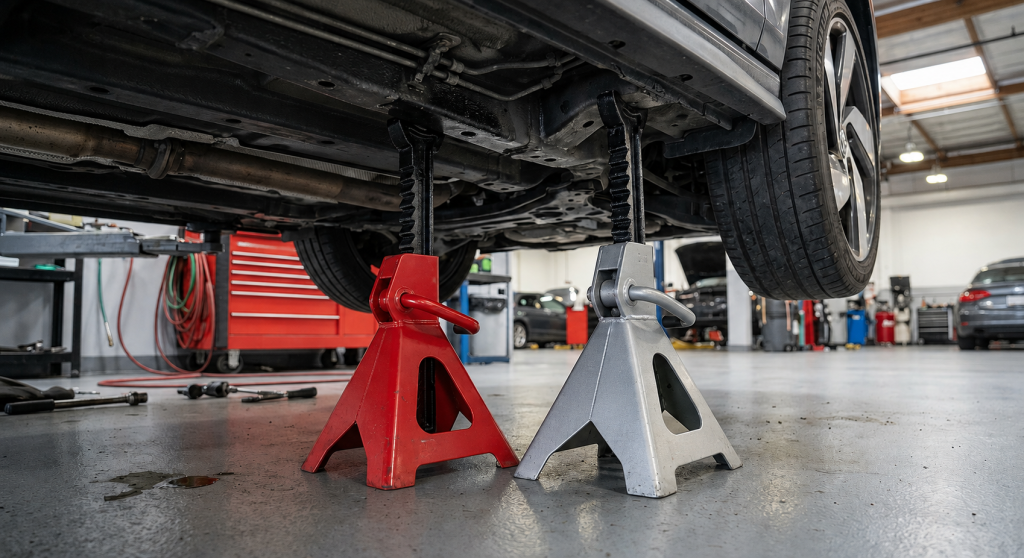
Close-up comparison of ratchet mechanism and pin-lock mechanism on jack stands
Speed vs Certainty: The Core Trade-Off
Here's the honest trade-off nobody puts on the box: ratchet stands are faster, pin-lock stands are more certain. That's it. Everything else is secondary.
A ratchet stand adjusts in one continuous motion — squeeze, lift, release, done. A pin-lock stand requires you to lift the inner column, find the nearest hole, and drop the pin — which sometimes means the height isn't exactly what you wanted, only the nearest available notch.
When Speed Wins
For instance, a quick-service tire shop running 40+ vehicles a day can't afford 20 extra seconds per stand placement. Multiply that by four stands per car and dozens of cars, and ratchet stands save real labor hours over a week.
When Certainty Wins
A body shop technician working under a vehicle for three hours on a frame repair wants zero doubt about what's holding that car up. The extra 15 seconds to seat a pin is nothing compared to the peace of mind.
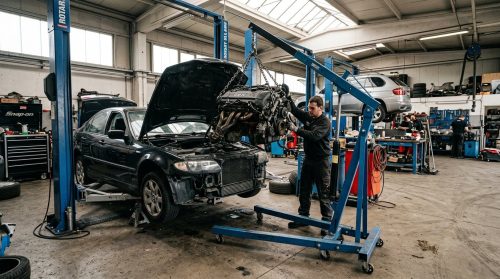
Mechanics adjusting ratchet and pin-lock jack stands in a garage
Load Capacity: Where Pin-Lock Usually Pulls Ahead
If you're lifting anything heavier than a standard sedan or light truck, pin-lock stands generally give you more headroom. Most ratchet stands top out around 2–3 tons per stand, which is fine for passenger cars but starts feeling thin for full-size trucks, vans, or commercial vehicles.
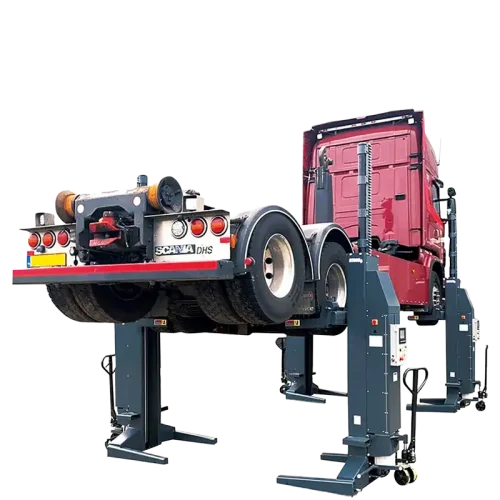
Pin-lock designs scale up more easily because the pin-and-hole system distributes load through solid steel rather than through spring-tensioned teeth. You'll find pin-lock stands rated anywhere from 3 tons up to 12 tons or more in heavy-duty fleet and truck applications. If your bay regularly services trucks or buses, pairing the right stands with the right lift matters just as much — see our guide on truck and bus workshop lifts for the bigger picture.
Passenger cars / light trucks: 2–3 ton ratchet or pin-lock both work fine
Full-size trucks / vans: 6-ton pin-lock stands are the safer baseline
Commercial / fleet vehicles: 10–12 ton pin-lock stands, no ratchet option comes close
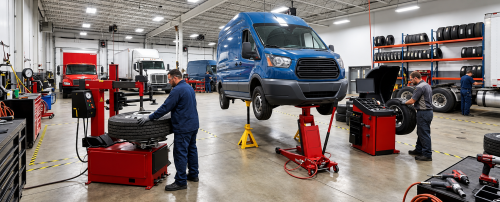
Heavy-duty pin-lock jack stand supporting a commercial truck
A Real Shop Scenario: Mixed Fleet, Mixed Stands
Consider a mid-size independent shop that handles everything from compact commuter cars to the occasional dually pickup. Running one type of jack stand for every job is a mistake this shop learned the hard way — a technician once tried using 3-ton ratchet stands under a loaded 3/4-ton truck, and the margin of safety was uncomfortably thin.
After that, the shop split its fleet of stands: ratchet stands stayed on the quick-turnaround bay for oil changes and brake jobs on passenger vehicles, while 6-ton pin-lock stands got reserved specifically for trucks and any job expected to run longer than an hour. That kind of deliberate matching — not just buying whatever's cheapest — is what actually prevents incidents on a busy floor.
Locking System
Ratchet Jack Stands
Pin-Lock Jack Stands
Height Adjustment Speed
Fast
Slower
Locking Mechanism
Spring-loaded ratchet teeth
Solid steel pin
Typical Load Capacity
2–3 tons
3–12 tons
Best For
Quick-service bays
Body shops, heavy-duty
Failure Mode Risk
Ratchet wear/skip
Pin shear only under extreme overload
Maintenance Needs
Spring tension checks
Pin/hole wear inspection
Price Range
Lower to mid
Mid to higher
Maintenance Habits That Prevent Failures
A jack stand that passed inspection last year isn't automatically safe this year. Both systems degrade — just differently, and knowing what to check keeps your stands rated for what the label actually says.
Ratchet Stand Checks
Inspect the ratchet teeth for rounding or chipping every quarter
Test the spring tension — a sluggish return spring is an early warning sign
Watch for any 'creep' where the stand slowly lowers under load over several minutes
Pin-Lock Stand Checks
Check the pin itself for bending, especially after any overload incident
Inspect the holes in the column for elongation or egg-shaping
Confirm the pin drops fully and isn't just resting on the edge of the hole
If you're unsure how these checks connect to broader shop safety practices, our article on hydraulic lift safety inspection routines covers the same inspection discipline applied to lifts.
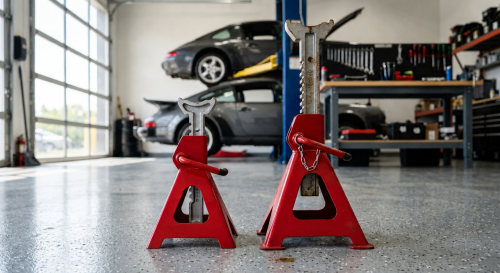
Technician inspecting jack stand pin and ratchet locking mechanisms
Common Mistakes Shops Make With Locking Systems
The single biggest mistake? Buying based on price per stand rather than cost per job. A cheap ratchet stand that fails inspection after a year of daily heavy use costs more in downtime and liability than a pin-lock stand that lasts five years under the same conditions.
The second biggest mistake is mixing stand types on the same vehicle without matching capacity — using two ratchet stands and two pin-lock stands rated differently under one car creates uneven load distribution if either pair is undersized.
And the third: skipping the ratchet release mechanism check. Ratchet stands that don't release cleanly get forced open by technicians in a hurry, which stresses the ratchet teeth exactly the way that causes premature failure.
Matching Locking System to Bay Type
Not every bay in your shop needs the same jack stand. Think in terms of dwell time — how long does a vehicle typically sit supported in that specific bay?
Quick-service / tire bays: Ratchet stands, 2–3 ton, prioritize speed since dwell time is under 20 minutes per vehicle
General repair bays: Either system works, but pin-lock gives more margin if job duration is unpredictable
Body shop / long-duration bays: Pin-lock stands, minimum 3-ton, higher capacity for trucks and SUVs
Fleet / heavy-duty bays: Pin-lock exclusively, 6-ton or higher depending on vehicle class
Yes. We provide OEM and ODM services, including logo printing, custom colors, packaging design, and product specification adjustments. Available options depend on the product type and order quantity.
What is your minimum order quantity (MOQ)?
MOQ requirements vary by product. Most standard products are available in flexible quantities, while customized branding, packaging, or product development may require a minimum order. Contact us with the product model and required quantity for confirmation.
Do you offer samples?
Samples or trial orders are available for most product categories. Sample charges and refund terms depend on the selected product and will be confirmed before ordering.
Which ports do you ship from?
We can arrange shipment from major ports in China, including Shanghai, Ningbo, Shenzhen, and Qingdao. The final port will be selected according to the product location and shipping arrangement.
Which trade terms do you support?
We support EXW, FOB, CIF, and other standard international trade terms. The available option will be confirmed in your quotation based on the order and destination.
Can you supply products beyond your catalog?
Yes. If you cannot find the required automotive tool or workshop equipment in our catalog, send us your specifications, target quantity, and application. Our team can help identify and source a suitable solution.