Shop Crane Buying Guide: Choosing the Right Engine Hoist for Your Garage
For most independent garages, a 2-ton foldable engine crane with a telescoping boom covers the majority of passenger car and light truck engine pulls, while shops regularly handling diesel trucks or heavy commercial engines need a 3-ton or air-assisted model with a wider leg stance. Capacity should be matched to the heaviest engine-plus-attachments weight you actually lift, not to the biggest number on the price tag. Get this wrong in either direction and you either overpay for tonnage you'll never use, or worse, you buy light and find out mid-lift that the boom is maxed out at the extension you need.
Key takeaways
A 2-ton foldable engine crane covers most sedan and light truck engine pulls, including the transmission and rigging weight attached.
Shops regularly pulling diesel truck or commercial engines should plan around 3-ton minimum capacity, with some jobs justifying 4-ton.
Rated capacity applies at the shortest boom extension only, and it drops as the boom extends to reach deeper engine bays.
There is no official '3-3-3 rule' for cranes, but the real habit it points to is checking boom position, leg locks, and load centering before every lift.
Ram seal quality and leg casting thickness, not the tonnage number, are what actually fail first on cheaper crane units.
How Do You Determine What Size Crane You Need?
Buyers size cranes by guessing at vehicle weight. That's the wrong number entirely. A crane's rated capacity is tied to the engine assembly coming out, not the car it came from, and most manufacturers rate that capacity at the shortest boom extension only. Extend the boom to clear a fender or reach a deep bay and that number drops, sometimes significantly.
What actually determines the load is the weight of the engine itself, plus whatever's still bolted to it. Transmission attached? That's extra weight. Accessories still mounted, lifting chain, leveler bar, all of it adds up. Shops rarely pull a bare block off the hook. They pull an engine with a transmission hanging off one end and a chain rig adding its own mass.
Take a hypothetical garage that mostly services sedans and compact SUVs. Even with the transmission attached, that load rarely crosses the 2-ton threshold, which is why a 2-ton foldable crane covers most independent repair shops without drama.
A shop that regularly pulls diesel pickup or commercial van engines is a different story. Plan around 3-ton capacity as the minimum, and don't be surprised if certain jobs push you toward a 4-ton unit instead.
The smart move is buying slightly above your typical load. That margin covers the occasional heavier job without forcing you to pay for tonnage you'll use once a year. For shops weighing broader equipment decisions at the same time, the auto repair shop equipment checklist walks through budgeting across startup and growth stages.
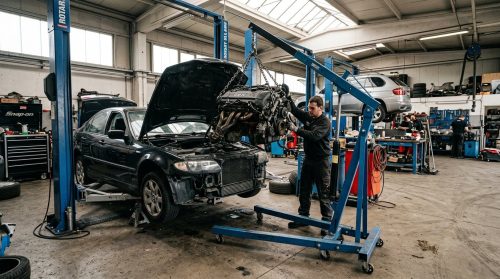
Mechanic checking the load rating plate on an engine crane boom before a liftEngine crane with extended telescoping boom lifting an engine in a garage bay
What Are the Different Types of Shop Cranes?
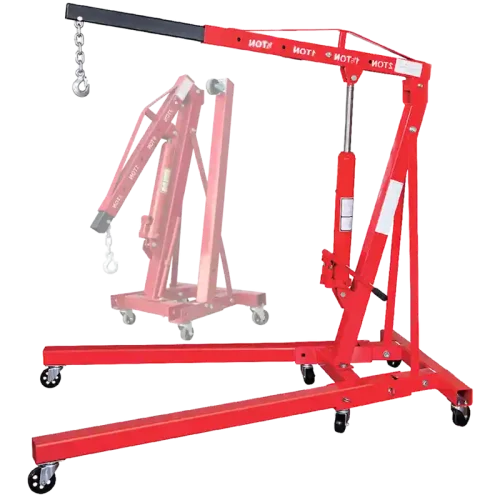
Not every 'crane' sold online is built for a repair bay. Industrial overhead bridge cranes and jib cranes are fixed, building-mounted systems designed for fabrication plants, and they're rarely practical or necessary in a garage. What a mechanic actually needs is a portable engine crane, and there are a few formats worth knowing.
Type
Best for
Foldable (collapsible)
Shops with limited floor space, multi-bay setups sharing one crane
Fixed-leg
Shops pulling engines daily with floor space to spare
Manual hydraulic ram
Occasional use, lowest cost, hand-pump operation
Air-assisted / pneumatic hydraulic
High-volume shops needing faster lift cycles and less operator fatigue
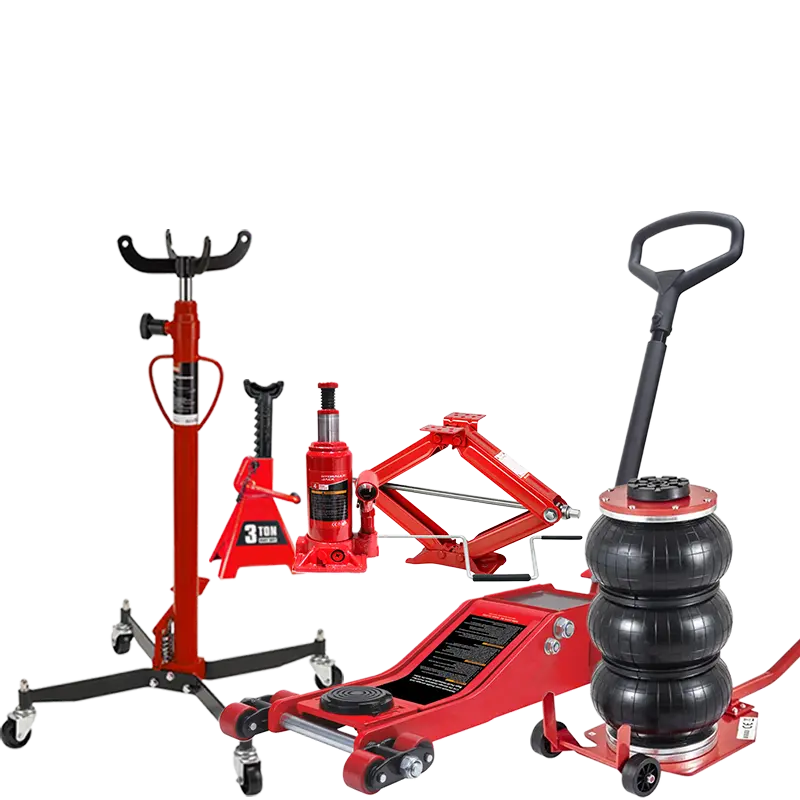
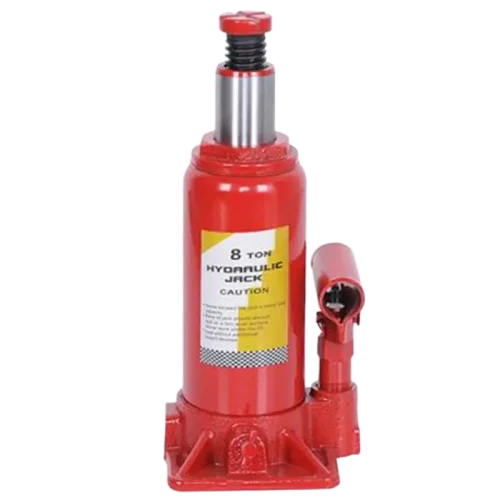
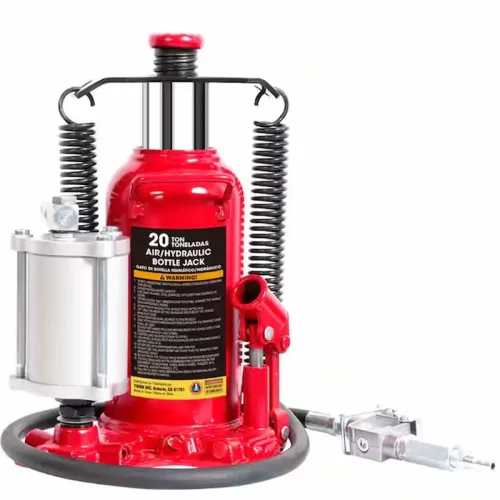
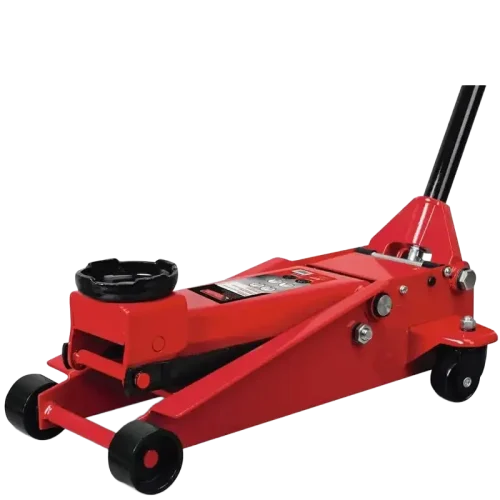
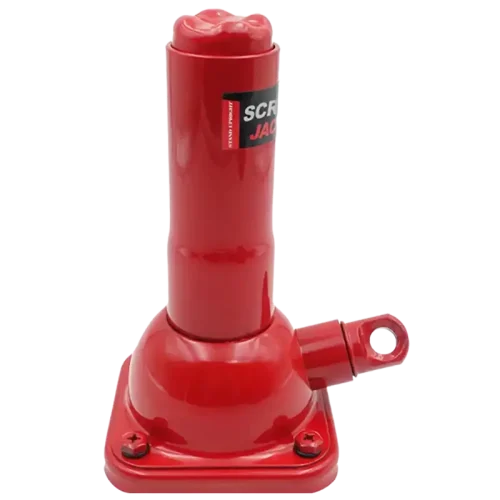
Air-assisted engine cranes use a pneumatic-assisted ram instead of a hand pump, which matters if you're pulling two or three engines a day rather than two or three a month. Less pumping means less operator fatigue and faster cycle times between lifts. On the broader lifting side, Winsen offers hydraulic jacks ranging from 2-ton workshop models up to 200-ton industrial hydraulic cylinders, so the same capacity-matching logic that applies to engine cranes applies across a shop's full lifting toolkit.
Comparison of foldable, fixed-leg, manual, and air-assisted engine cranes in a workshop
Boom Length and Leg Spread: Why the Capacity Label Doesn't Tell the Whole Story
A crane rated at 2 tons isn't rated at 2 tons everywhere along its boom. That number applies at the shortest boom setting. Extend the boom to reach deeper into an engine bay, and the safe working load drops as leverage increases on the hydraulic ram and frame.
This is the detail most buying guides skip entirely, and it's the one that actually causes problems on the shop floor. If you need extra reach to clear a fender or get the hook over a transverse-mounted engine, check the rated capacity at that specific boom position, not the headline number printed on the box.
Leg spread matters just as much
Wider leg spread resists tipping under load, full stop. But wide legs don't always fit. Narrow aisles between lift columns, or the footprint of a two-post lift, can force a narrower stance than you'd like.
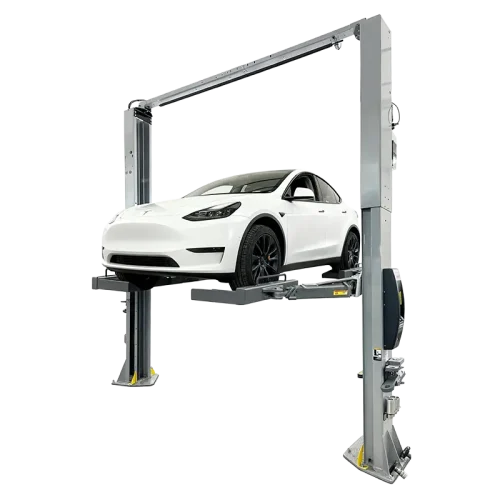
A crane with a narrow leg stance in a tight bay is a real risk if the operator doesn't also check the boom position's rated capacity before lifting. The two factors compound: narrow legs plus extended boom plus a heavy load is exactly how a crane tips. Shops planning bay layout around lifts should review clearance requirements in the auto lift dimensions and clearance guide before finalizing where the crane needs to maneuver.
Floor Space and Storage Between Jobs
An engine crane sits idle most of the day, and that idle time is exactly when it needs a defined spot out of the way. This is the part competitors skip because they're writing about industrial cranes bolted to a building, not portable units that have to share floor space with cars, lifts, and foot traffic.
A fixed-leg crane needs a permanent clear footprint near the bay it services. In a small garage, that's floor space you can't use for anything else, and it adds up fast if you've only got two or three bays total.
A foldable crane collapses flat for wall or corner storage, which makes it the better fit for shops running multiple bays off a single crane. Wheel it out, extend the legs, do the lift, fold it back up.
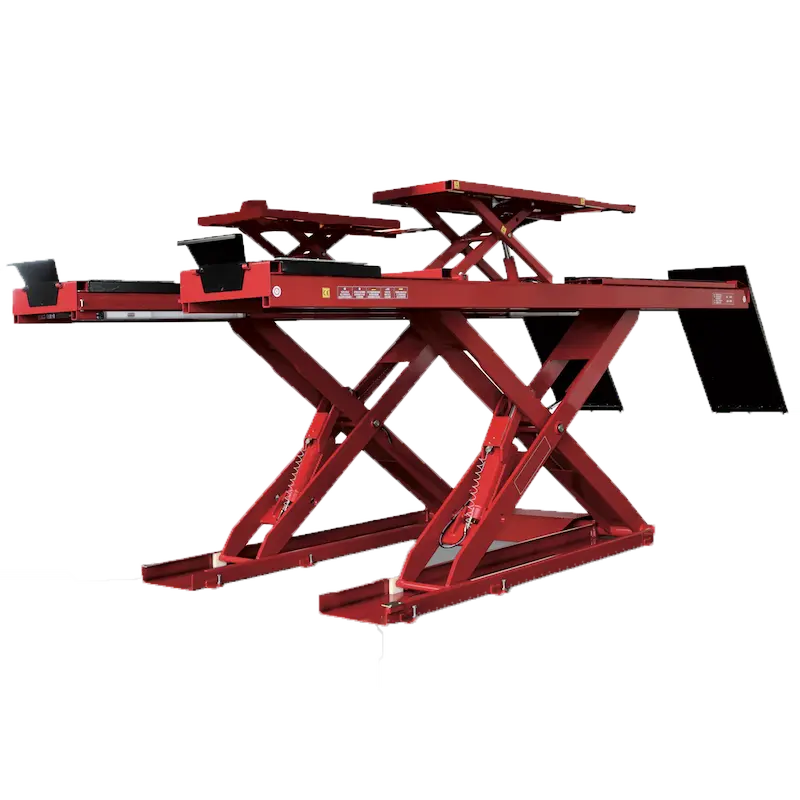
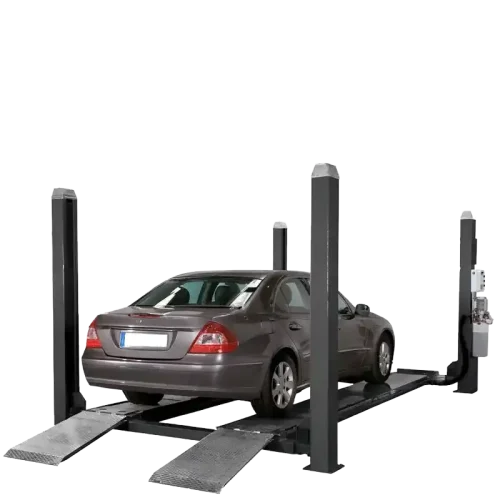
Before buying either style, walk the actual path the crane needs to travel from storage to the vehicle. Check aisle width, note whether it has to pass other lifts or equipment, and measure clearance with the boom extended, not just the folded width. Shops running tight spacing around 2-post or 4-post lifts should pay particular attention here. The 2-post vs 4-post lift comparison covers footprint tradeoffs that affect how much room is left for crane movement between bays.
What Is the 3-3-3 Rule for Cranes, and Does It Apply to a Shop Crane?
There is no single industry-wide '3-3-3 rule' formally published for shop or engine cranes the way there is for certain rigging practices in other industries.
What the search is really pointing at is a habit, not a formula: check the load rating at your current boom position, confirm the leg spread is fully extended and locked, and make sure the lifting point is centered before you lift.
Treat it as three checks every single time, not a memorized rule: boom position matched to rated capacity, leg lock pins fully engaged, load centered under the hook.
Skipping any one of these three is the most common reason an engine crane tips during a lift. It's rarely a mechanical failure, it's a skipped check.
Safety Checks Before Every Lift
A tipped crane with an engine hanging off it isn't a minor accident. It's a crushed fender at best and a serious injury at worst. The checks below should happen before every single lift, not just the first one of the day.
Fully extend and lock the legs before attaching any load. Never lift with legs partially spread, even for a quick reposition.
Confirm the rigging chain or leveler bar connects at the engine's actual balance point, not a convenient bolt hole that happens to be nearby.
Check the hydraulic ram for smooth, even lift with no jerking before raising the load off its mounts. Jerky movement under initial load is a warning sign, not something to push through.
Keep the crane on a flat, solid floor surface. Never position it on a floor jack ramp or an uneven section of the bay.
Never walk or stand under a suspended engine, and lower the load as soon as it clears the vehicle rather than leaving it hanging while you move other equipment around.
These habits matter just as much around other lifting equipment in the shop. The hydraulic lift safety inspection guide covers the same pre-lift discipline applied to two-post and four-post lifts.
Mechanic checking a lifting chain attachment point on an engine before raising it with a crane
How Much Does a Shop Crane Cost?
Price scales with three things: rated capacity, lift mechanism, and build quality of the boom and leg castings. A basic foldable 2-ton hydraulic crane sits at the entry end of the category. Air-assisted and higher-capacity fixed-leg units cost more, both because of the added mechanism and because they're built with heavier steel to handle the load.
Cheaper units often cut corners in two places specifically: the hydraulic ram seal quality and the leg casting thickness. Those are the two parts that fail first under daily use, and they're also the two parts a buyer can't easily inspect from a product photo.
For a shop buying once and using the crane daily, paying more upfront for a heavier-duty ram and thicker steel legs costs less over the life of the equipment than replacing a budget unit after repeated seal failures or a cracked leg casting.
When comparing suppliers, ask about ram seal material and leg casting specs directly. Don't let the headline tonnage number be the only thing you compare.
Maintenance That Keeps a Shop Crane Reliable
Check the hydraulic ram for seepage or seal wear before each lift. A slow leak under load is exactly how a crane drops an engine mid-job, and a quick visual check before you start is enough to catch most of these early.
Keep the ram rod clean and lightly oiled to prevent corrosion that damages the seal every time the ram extends.
Grease the leg and boom pivot points on a regular schedule. Dry pivots cause uneven leg spread and boom binding, both of which affect stability under load.
Inspect the lifting hook and chain for wear or deformation. A stretched or nicked link is a hidden failure point that won't announce itself until it fails.
Bleed air from the hydraulic system periodically if the lift feels soft or spongy. That symptom points to trapped air, not a seal failure, and it's a quick fix if caught early.
This same logic, inspect before use, lubricate on a schedule, don't ignore soft or spongy feel, applies across hydraulic lifting equipment generally, not just engine cranes.
Choosing the Right Crane for Your Garage
Match capacity to your heaviest routine engine-plus-rigging load, pick foldable or fixed-leg based on the floor space you actually have, and never skip the three pre-lift checks: boom position, leg lock, centered load. That's the whole decision, stripped of marketing noise.
A crane bought with a margin above your typical load and built with a quality ram will outlast a cheaper unit bought at exact capacity. The math favors spending slightly more upfront almost every time.
Winsen has supplied hydraulic jacks and lifting equipment to global distributors and repair facilities for 20+ years, with a range running from 2-ton workshop models up to 200-ton industrial cylinders, giving shops a single source for capacity-matched lifting tools. Buyers can review the Automotive Jacks & Shop Equipment category to compare hydraulic and air-assisted options against their shop's actual lifting needs, rather than guessing based on a headline tonnage number.
Frequently asked questions
What is the 3-3-3 rule for cranes?
There's no officially published 3-3-3 rule for shop or engine cranes. The concept people are searching for really means three checks before every lift: confirm the rated capacity at your current boom position, make sure the leg spread is fully extended and locked, and verify the load is centered under the hook.
How much does a shop crane cost?
Price depends on rated capacity, lift mechanism, and build quality. Basic foldable 2-ton hydraulic cranes sit at the entry end of the category, while air-assisted and higher-capacity fixed-leg units cost more due to heavier materials and faster lift mechanisms. Ram seal quality and leg casting thickness drive long-term value more than the tonnage label.
How do you determine what size crane you need?
Size a crane by the actual weight of the engine plus any attached transmission, accessories, and rigging chain, not by vehicle size. Shops servicing sedans and compact SUVs rarely exceed 2 tons; shops pulling diesel truck or commercial engines should plan around 3 tons minimum.
What are the different types of shop cranes?
The main types used in auto repair garages are foldable engine cranes, fixed-leg cranes, manual hydraulic ram units, and air-assisted pneumatic cranes. Foldable units suit shops with limited space, while fixed-leg and air-assisted models suit higher-volume shops that pull engines daily.
Yes. We provide OEM and ODM services, including logo printing, custom colors, packaging design, and product specification adjustments. Available options depend on the product type and order quantity.
What is your minimum order quantity (MOQ)?
MOQ requirements vary by product. Most standard products are available in flexible quantities, while customized branding, packaging, or product development may require a minimum order. Contact us with the product model and required quantity for confirmation.
Do you offer samples?
Samples or trial orders are available for most product categories. Sample charges and refund terms depend on the selected product and will be confirmed before ordering.
Which ports do you ship from?
We can arrange shipment from major ports in China, including Shanghai, Ningbo, Shenzhen, and Qingdao. The final port will be selected according to the product location and shipping arrangement.
Which trade terms do you support?
We support EXW, FOB, CIF, and other standard international trade terms. The available option will be confirmed in your quotation based on the order and destination.
Can you supply products beyond your catalog?
Yes. If you cannot find the required automotive tool or workshop equipment in our catalog, send us your specifications, target quantity, and application. Our team can help identify and source a suitable solution.