How to Choose the Right Wheel Alignment System: Space, Vehicles & ROI
The right wheel alignment system for your workshop depends on three variables: the floor space available in your bays, the vehicle types you service, and how quickly the machine pays for itself. A 3D camera-based aligner suits most mid-volume general repair shops, while high-throughput or truck-focused facilities should budget for a wireless 3D system with extended vehicle coverage. Get those three factors right and the equipment decision becomes straightforward.
Understanding Alignment System Types: 2D, 3D, and Wireless
Wheel alignment machines fall into three practical categories, each with distinct trade-offs in accuracy, speed, and cost.
2D (Sensor-Based) Aligners
These use corded sensors clamped to each wheel and are the most affordable entry point — typically $1,500–$4,000. They measure toe and camber reliably but require manual input for caster and are slower to set up. Best suited to shops doing fewer than 5 alignments per day on passenger cars and light vans.
3D Camera-Based Aligners
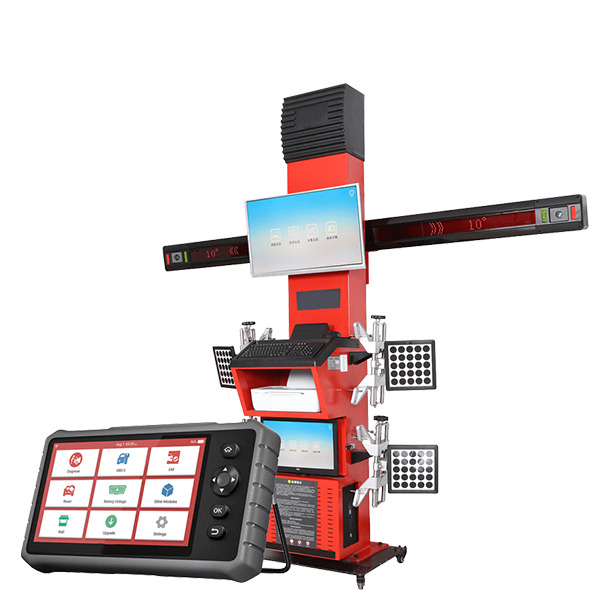
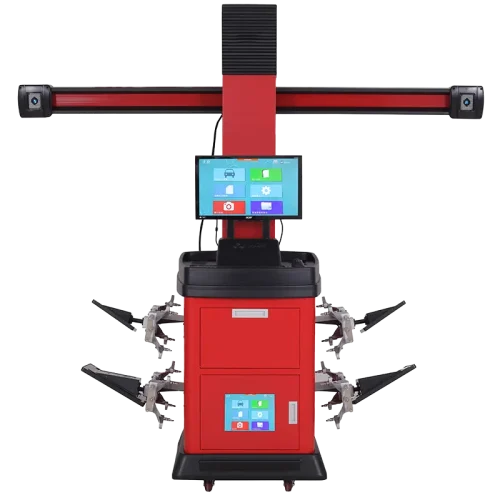
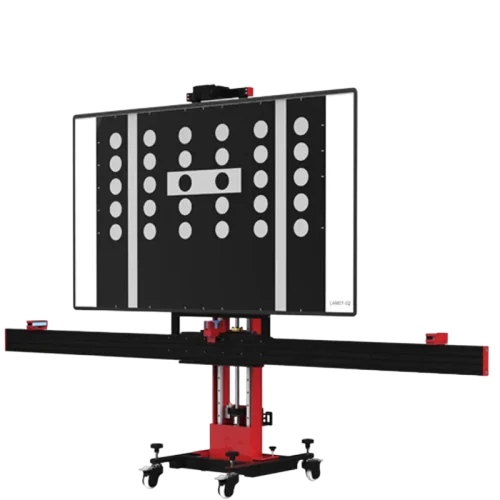
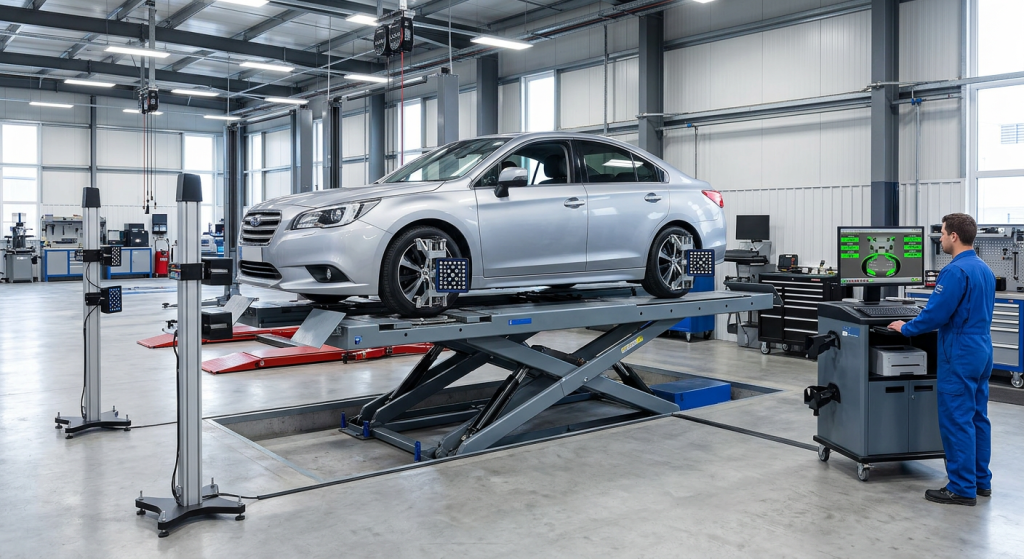
Cameras on fixed stands read targets mounted to each wheel, delivering full 4-wheel alignment data in under 10 minutes. Price range: $4,000–$10,000. This is the industry standard for general workshops handling cars, SUVs, and light trucks.
Wireless 3D Systems
Targets communicate wirelessly with a central console — no camera stands to reposition between jobs. Setup time drops to 3–8 minutes and vehicle coverage extends to trucks and buses. These systems start around $8,000 and are the right choice for high-volume or mixed-fleet facilities. Pair any 3D system with WINSEN's wheel alignment equipment range to match the full tyre service workflow.
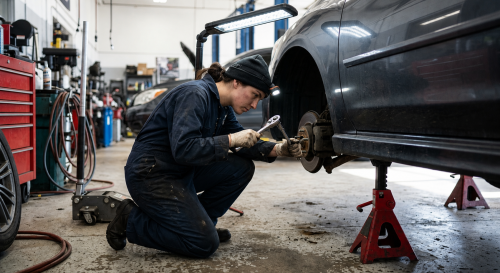
3D wheel alignment camera stand and target clamps mounted on a vehicle wheel in a workshop
Floor Space and Bay Layout: What the Numbers Actually Mean
Alignment systems are not just machines — they dictate bay geometry. Getting this wrong means expensive retrofitting or a machine that simply cannot perform accurate measurements.
Minimum Bay Dimensions
2D sensor systems: 5.5 m × 6 m bay minimum — sensors stay close to the vehicle.
3D camera systems: 6 m × 7.5 m recommended — camera stands need 2–3 m clearance behind each axle.
Wireless 3D systems: 5.5 m × 7 m — no fixed camera stands, but the vehicle still needs full runout space.
Lift Compatibility Is Non-Negotiable
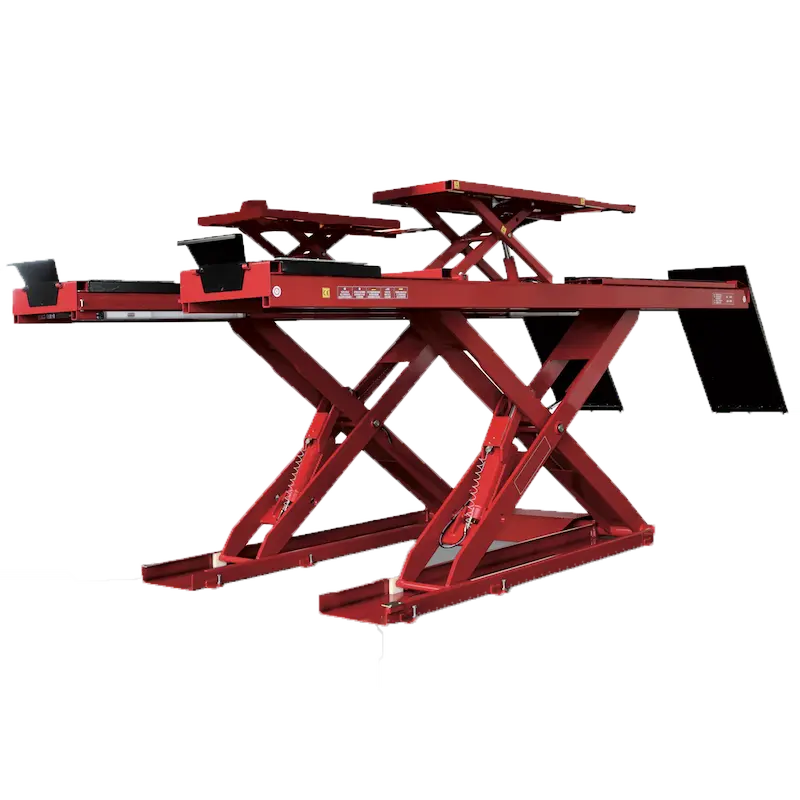
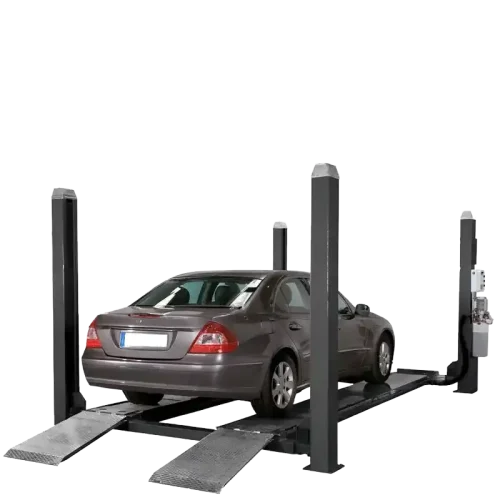
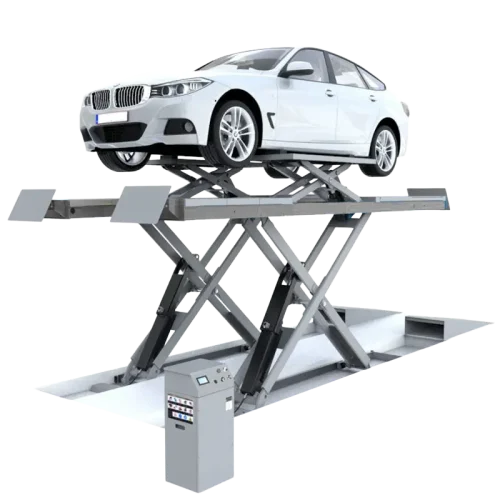
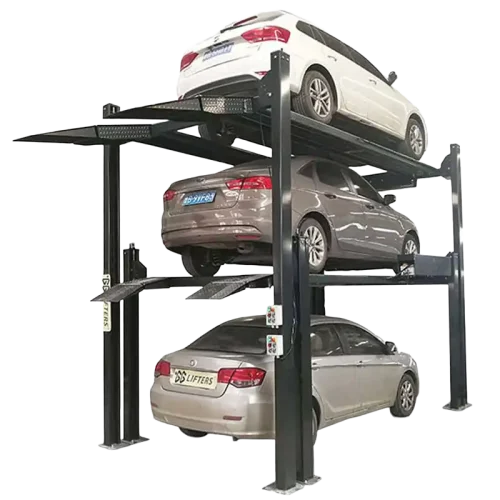
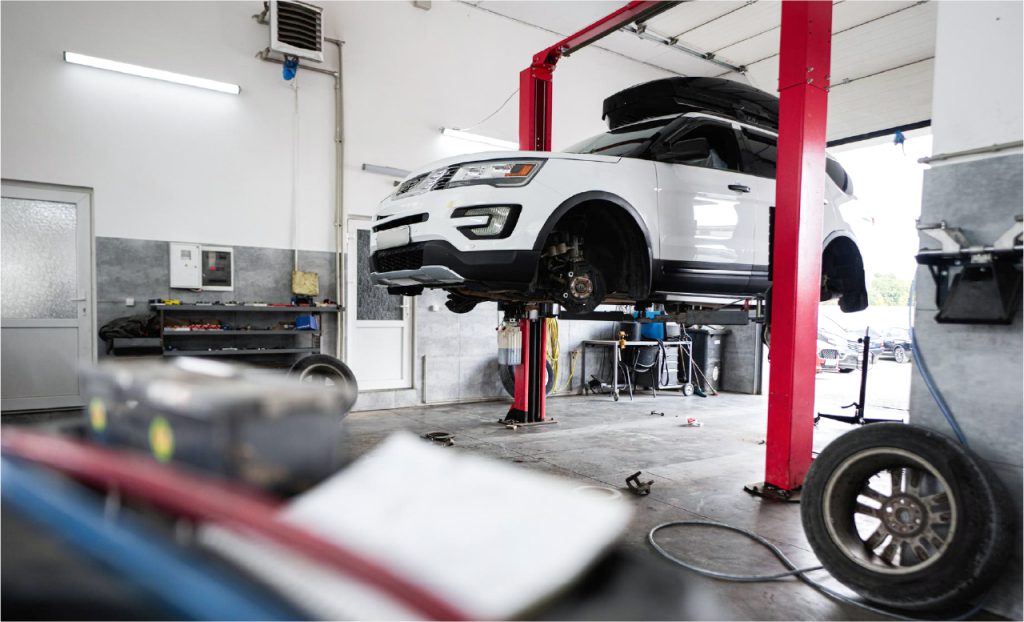
Almost every alignment job requires the vehicle to be on a lift with free-rolling turn plates and slip plates. Four-post lifts are the standard platform for alignment work because they support the vehicle at the wheels rather than the chassis, allowing steering and suspension to move freely. If you are still planning your bay layout, our guide on setting up a professional automotive workshop covers lift placement and clearance rules in detail.
Avoid positioning alignment bays near column lifts or heavy equipment that causes floor vibration — it degrades measurement accuracy.
Matching the System to Your Vehicle Range
The single most common buying mistake is purchasing a passenger-car aligner and then winning a fleet contract that includes light trucks or vans. Spec the machine for the heaviest and widest vehicle you expect to service — not the average job.
Passenger Cars and SUVs
Any 3D camera system with a wheelbase range up to 3,200 mm and a track width capacity of 1,000–2,000 mm covers the full passenger car and SUV segment. Most mid-range aligners hit these numbers comfortably.
Light Trucks and Vans
Extend the wheelbase spec to at least 3,800 mm and confirm the target clamps fit rim diameters from 14 to 22.5 inches. Some 3D systems require an optional adapter kit for commercial wheel profiles — confirm this before purchase.
Trucks and Buses
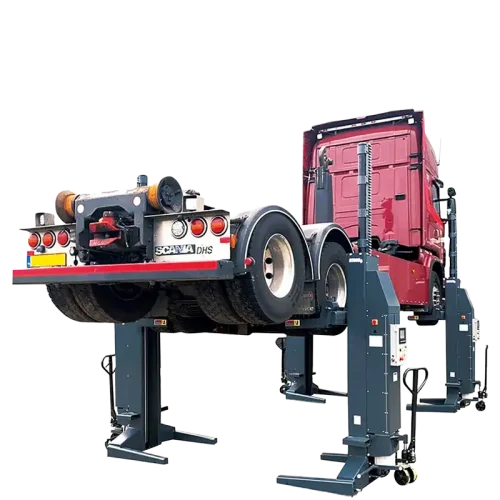
Heavy vehicle alignment demands a wireless 3D system with a wheelbase range up to 6,000 mm or more, plus heavy-duty clamps rated for 17.5–22.5-inch rims. The lift underneath must also be rated accordingly — heavy-duty column lifts are the standard solution for trucks and buses. For example, a regional bus depot that services 12-metre coaches needs a wireless aligner paired with a 4-column mobile lift system — a camera-based system with fixed stands simply cannot span that vehicle length accurately.
Calculating ROI: When Does an Alignment Machine Pay for Itself?
Alignment is one of the highest-margin services a workshop can offer — average job revenue runs $60–$120 for passenger cars and $150–$300 for commercial vehicles, with labour and consumable costs that are minimal once the machine is paid off.
Simple Payback Formula
Divide the total machine cost (including installation and any lift upgrade) by your net profit per alignment job, then divide by the number of jobs you realistically expect per week.
Example: A $7,000 3D aligner, 6 jobs per week at $50 net profit each = $300/week → payback in approximately 23 weeks.
Example: A $14,000 wireless system at a truck depot doing 4 commercial jobs per week at $200 net = $800/week → payback in roughly 18 weeks.
Hidden ROI Factors
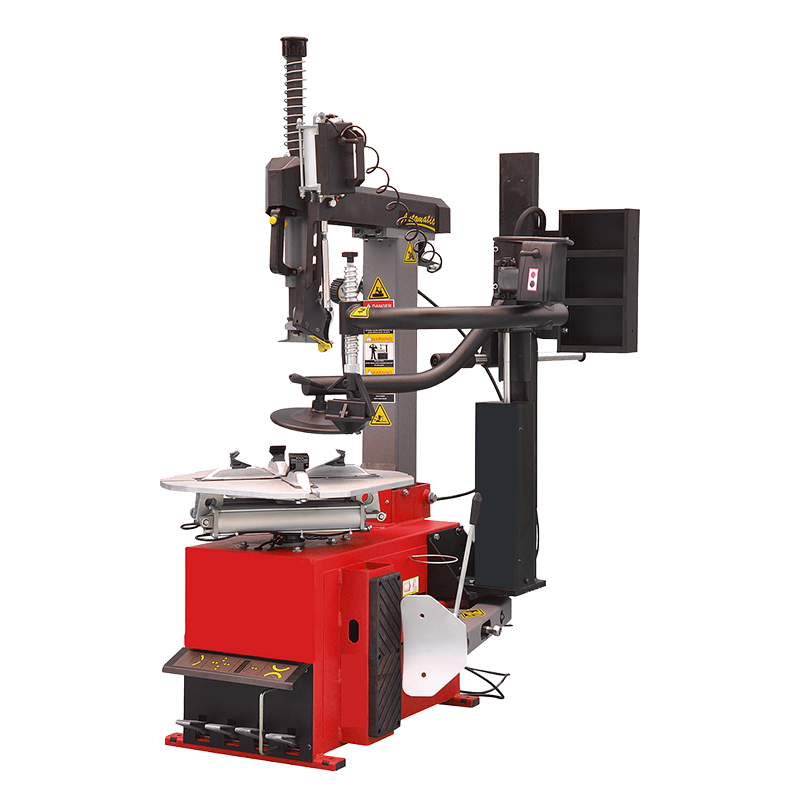
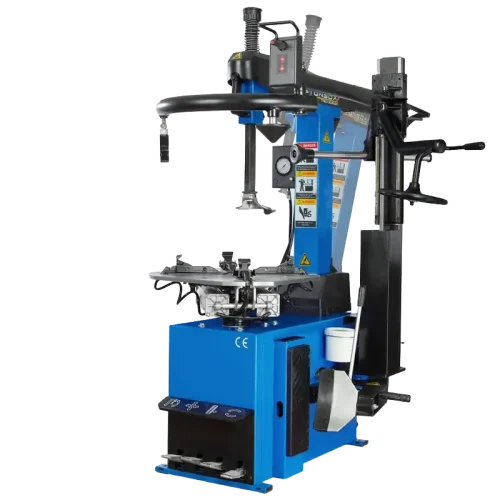
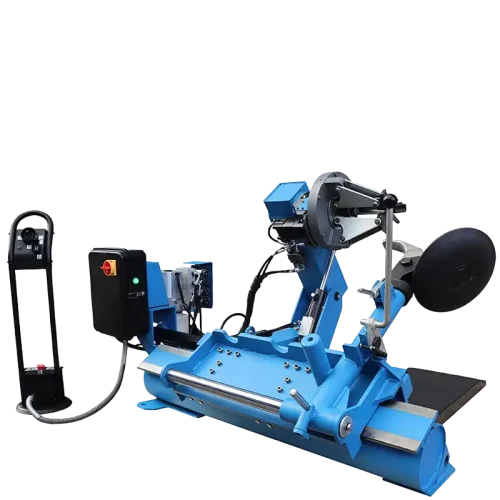
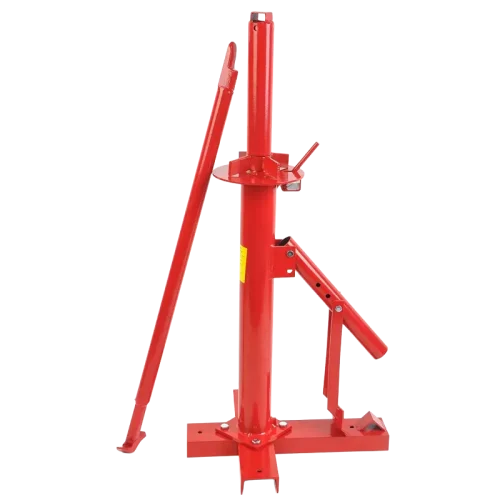
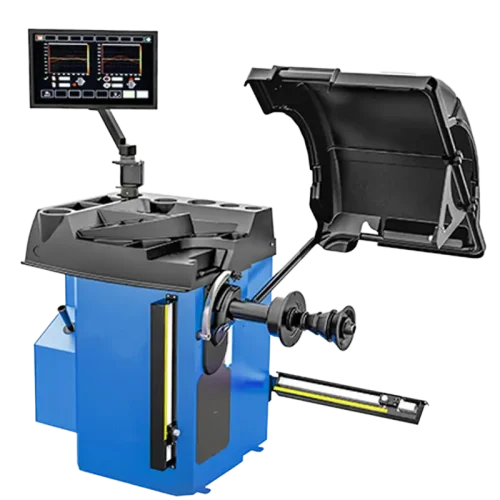
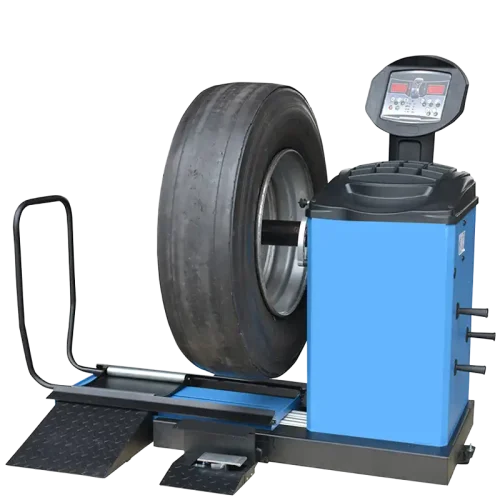
Beyond direct revenue, alignment capability increases customer retention — vehicles that return for tyre replacements are more likely to book alignment checks. Pairing your aligner with wheel balancers and tyre changers creates a complete tyre service bay that justifies higher average transaction values. Workshops that bundle alignment with tyre fitting typically see 20–35% higher ticket values per vehicle.
Making the Final Decision: A Practical Checklist
Before committing to a system, run through these five questions — they filter out 90% of mismatched purchases.
Bay dimensions confirmed? Measure the actual usable length and width, not the nominal bay size. Account for columns, doors, and existing equipment.
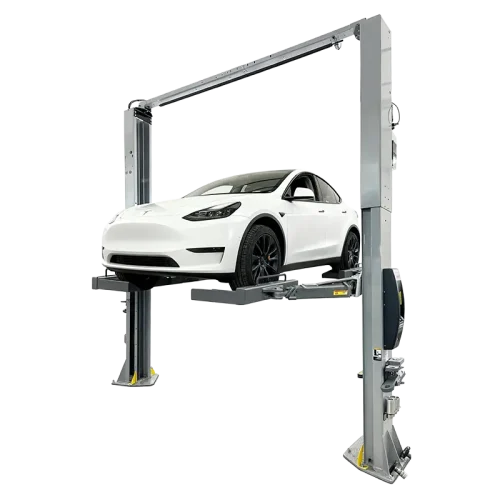
Lift already in place or budgeted? A four-post lift with turn plates is the baseline. If you are comparing lift types, the 2-post vs 4-post lift guide explains why four-post is preferred for alignment work.
Heaviest vehicle confirmed? Spec the aligner for your largest expected vehicle, not your average job.
Software and updates included? Vehicle database coverage matters — confirm the system includes your regional vehicle mix and that updates are not charged per year at prohibitive rates.
After-sales support available? Alignment machines require periodic calibration. Confirm the supplier provides calibration tools, remote support, or on-site service.
WINSEN supplies a full range of wheel alignment and tyre service equipment with OEM support for workshops at every scale. Contact the WINSEN team to match a system to your specific bay dimensions and vehicle mix — or download the product catalog to review full specifications before your next procurement decision.
Yes. We provide OEM and ODM services, including logo printing, custom colors, packaging design, and product specification adjustments. Available options depend on the product type and order quantity.
What is your minimum order quantity (MOQ)?
MOQ requirements vary by product. Most standard products are available in flexible quantities, while customized branding, packaging, or product development may require a minimum order. Contact us with the product model and required quantity for confirmation.
Do you offer samples?
Samples or trial orders are available for most product categories. Sample charges and refund terms depend on the selected product and will be confirmed before ordering.
Which ports do you ship from?
We can arrange shipment from major ports in China, including Shanghai, Ningbo, Shenzhen, and Qingdao. The final port will be selected according to the product location and shipping arrangement.
Which trade terms do you support?
We support EXW, FOB, CIF, and other standard international trade terms. The available option will be confirmed in your quotation based on the order and destination.
Can you supply products beyond your catalog?
Yes. If you cannot find the required automotive tool or workshop equipment in our catalog, send us your specifications, target quantity, and application. Our team can help identify and source a suitable solution.