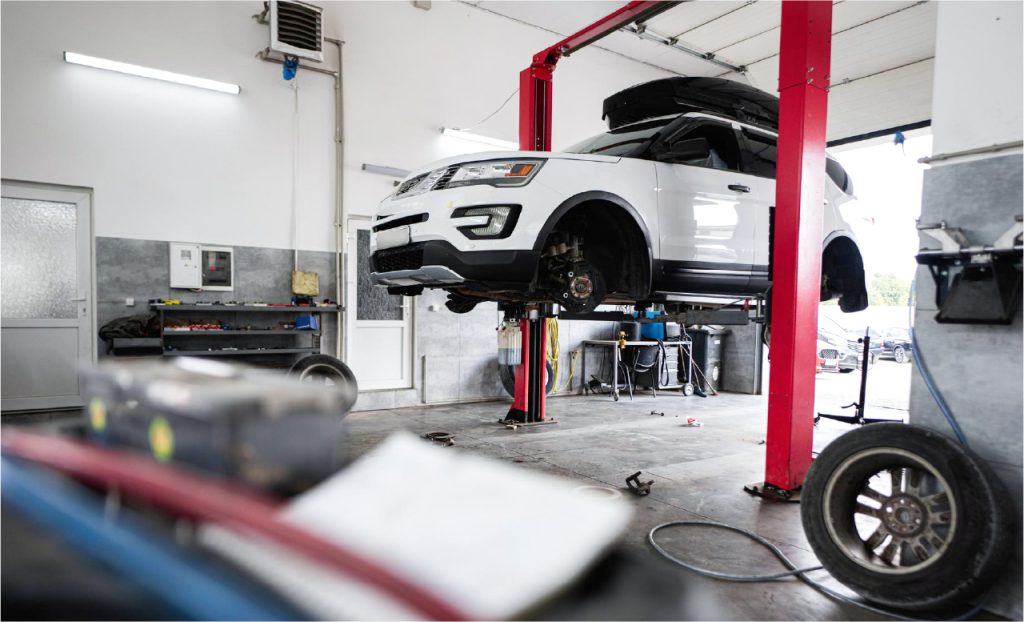
Car Scissor Lift vs the Alternatives: How to Choose
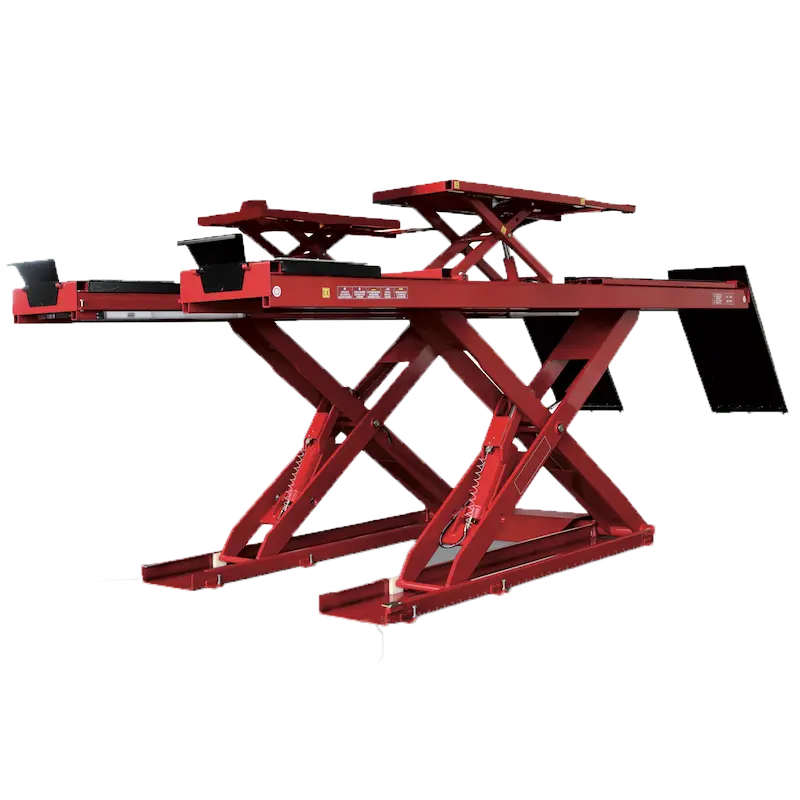
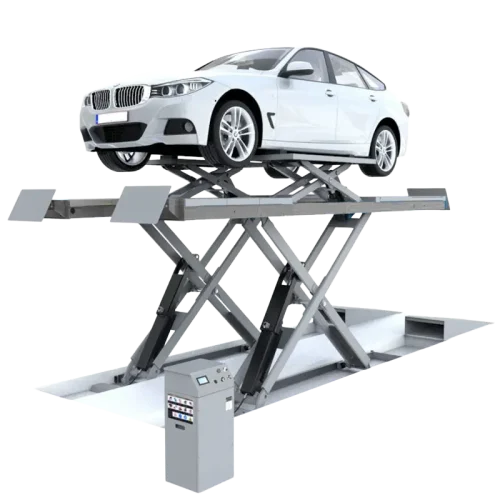
A scissor lift suits wheel, brake and tyre work in tight bays. It is safe when it is rated for the vehicle, installed on a sound floor and used with its mechanical locks engaged. When technicians need open access under the centre of the car, when the job is long-term storage, or when the fleet includes trucks and buses, a 2-post lift, 4-post lift, ramps, jack stands or column lifts fit better.
A standard 2-post lift typically needs about 3.6–4.2 m of ceiling. A mid-rise scissor lift raises a car to roughly 1 m and many styles fold down flat, which is why, after safety, bay height so often decides the question.
Are scissor lifts for cars safe?
Yes, when the lift is rated above the real vehicle weight, installed on a suitable floor following the manufacturer’s instructions, and used with its mechanical locks engaged before anyone works underneath. That baseline applies to every lift type, and the failure points of a scissor lift form a short list.
What makes a scissor lift safe in use
Capacity above the real vehicle weight. Rate the lift against the heaviest vehicle the bay will see, not the average one. Loaded vans and pickups are where margins disappear.
Mechanical locks, not hydraulics alone. Hydraulic pressure raises the load and the locks hold it, so technicians lower onto the locks before working under the vehicle.
A level, sound floor. A scissor lift concentrates load through its base frame, so cracked, sloping or poorly cured concrete matters. Follow the installation and anchoring instructions for the specific model.
Correct lift points and pad placement. Pads and platforms must sit where the vehicle manufacturer intends, and be checked before the vehicle leaves the ground.
Where problems actually come from
Incidents rarely trace back to the lift type itself. The usual causes are overloading, skipped locks, uneven or damaged floors, misplaced pads, hands or feet in the scissor pinch zone while lowering, and unbalanced loads. Removing a heavy component such as an engine or transmission shifts the centre of gravity, so a lift that was stable with the full vehicle may behave differently afterwards. Build hydraulic lift safety inspection routines into the bay’s maintenance plan, so locks, hoses, pads and anchors are checked on a schedule.
How the safety compares with the alternatives
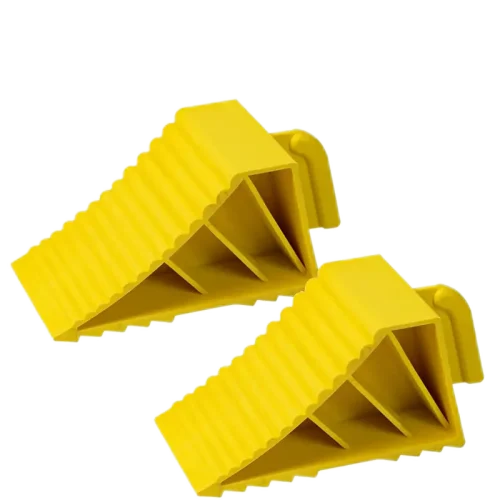
Each way of getting a car off the floor has its own failure mode. Jacking with stands depends on the operator placing and setting the stands correctly every time. A rated lift with engaged locks removes much of that human variable. Ramps depend on chocks, approach angle and a stable surface. Wheel-engaging 4-post lifts are often seen as the most forgiving, because the vehicle simply drives on and rests on its tyres. A scissor lift sits between these: more controlled than jacking, but still dependent on correct pad placement.
Read the operating manual and local workshop regulations before commissioning any lift. Certification and standards vary by model and market.
What can you use instead of a scissor lift?
Five options cover almost every workshop situation: 2-post, 4-post, portable or mobile-column lifts, ramps or low-rise portable lifts, and a floor jack with stands. The capacity figures are typical market ranges for car and light-van equipment, not the rating of any specific model.
Option
Best for
Typical capacity
Relative cost
Floor and space need
Undercar access
Main trade-off
Scissor lift
Wheel, brake and tyre work in compact bays
About 3–5 t for car models
Medium
Compact footprint; level, sound floor; works with lower ceilings
Good at the wheels; centre access can be limited on mid-rise styles
Less open space under the vehicle
2-post lift
General repair, brakes, suspension, exhaust, drivetrain
About 3–5 t for car models
Medium
Ceiling height, suitable slab, drive-through room
Open access to the whole underbody
Arms must be set at lift points; fixed installation
4-post lift
Storage, inspections, general service
About 3–5 t for car models; higher for heavy-duty
Medium to high
Larger footprint; drive-on
Good, though runways sit under the wheels
Wheel service usually needs rolling jacks
Portable or mobile-column lift
Flexible use, heavy vehicles, shared bays
Rated per system or per column
Low to medium
Clear floor and handling space
Depends on the system
Setup time; floor flatness matters
Ramps or low-rise portable lift
Quick inspections and fluid service
Rated per pair, light vehicles
Low
Minimal
Limited
Low working height; wheel-on lifting
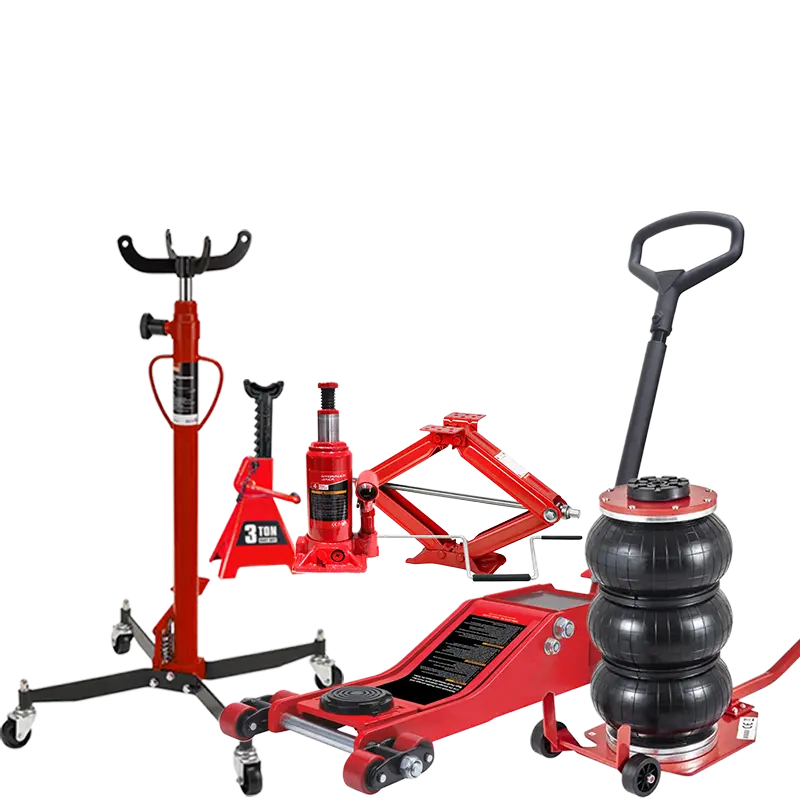
Floor jack + jack stands
Occasional wheel and brake work
Jacks about 2–3 t; stands from 2 t up to 12 t
Lowest
Almost none
Limited by stand placement
Slower; relies on correct stand use
Relative cost compares purchase price only. Installation, power supply and floor preparation shift the totals, and pit work in particular raises car scissor lift cost for in-ground models.
A 2-post lift needs ceiling height and a suitable slab, while a 4-post lift needs floor area instead, so footprint, access and installation usually settle 2-post vs 4-post for a given bay. At the low-rise end, professional car ramps and hydraulic service lifts range from simple drive-up ramps to hydraulic service units.
When a scissor lift is the right choice
A scissor lift earns its place when the constraints point that way:
Tyre, brake and wheel work is the core of the day’s jobs, so wheel access matters more than centre-underbody access.
Ceiling height is limited, which rules out a standard 2-post.
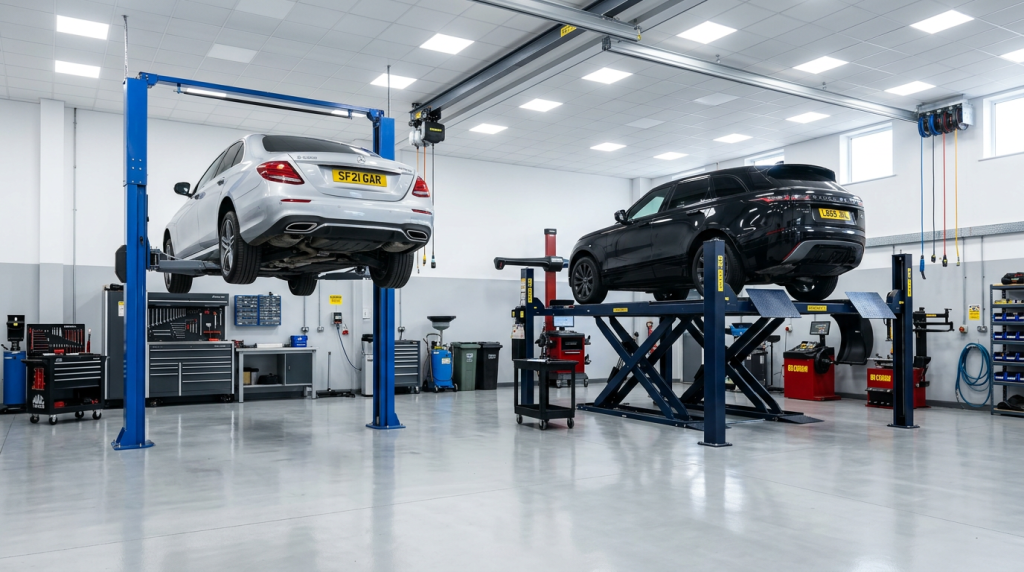
Floor space must stay clear. Many scissor styles fold down flat so the bay can be reused or driven over.
Jobs are short and frequent, such as seasonal tyre changeovers, inspections and quick brake jobs, where fast positioning beats full access.
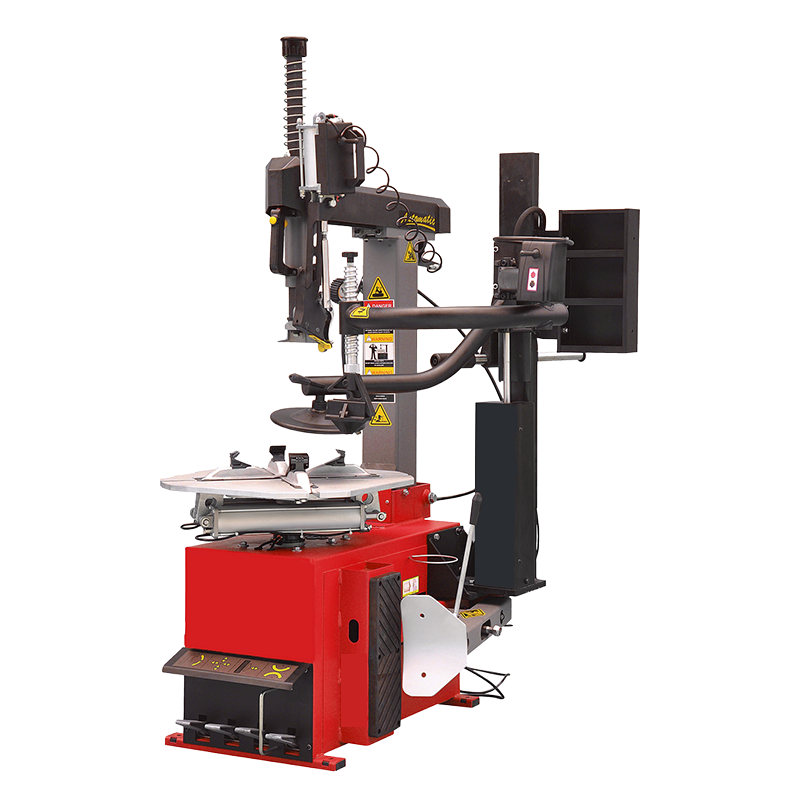
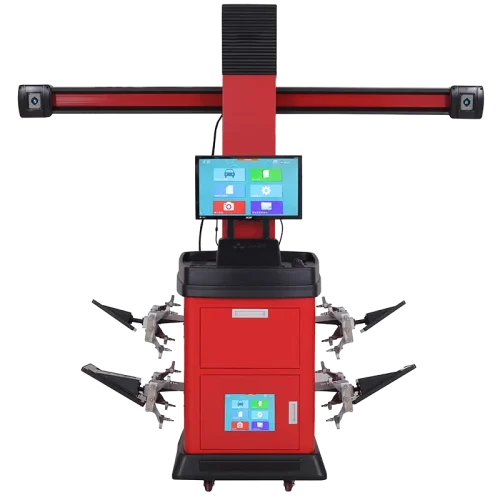
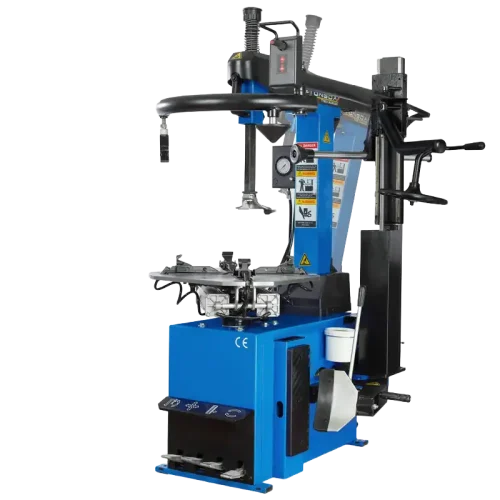
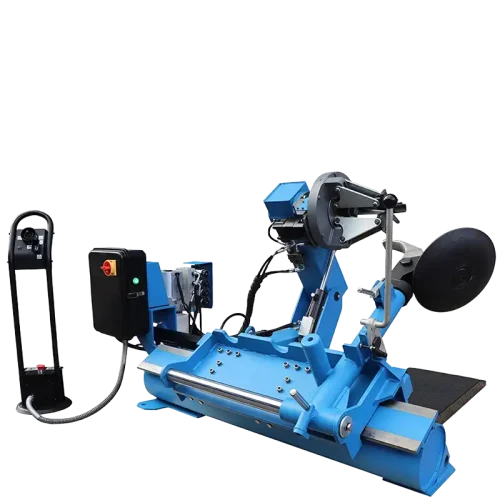
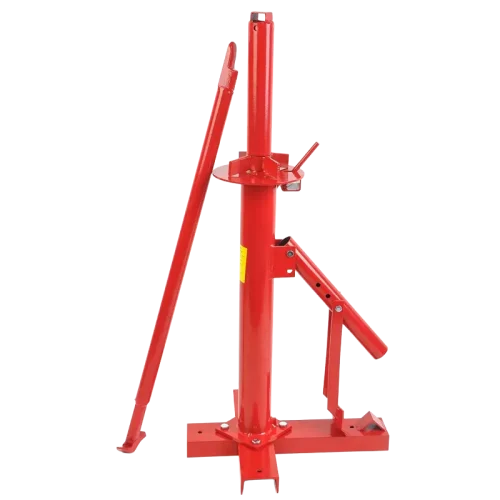
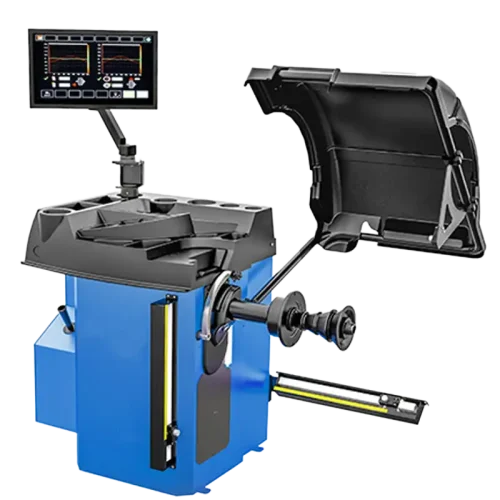
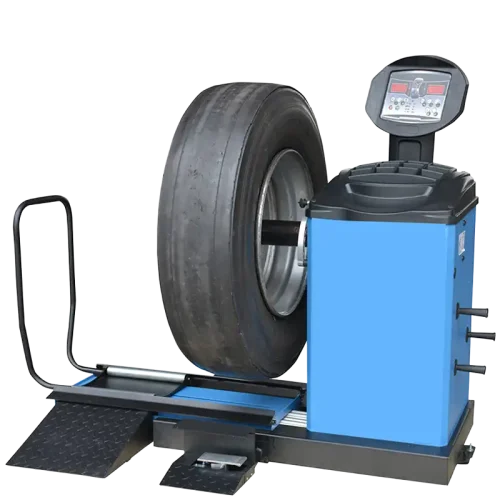
Tyre changeover bays typically run a lift beside a car tyre changer and a car wheel balancer, so the vehicle moves between stations without delay.
Which scissor style fits
Mid-rise, low-profile and in-ground designs suit different spaces and access needs. Mid-rise scissors raise a vehicle to roughly 1 m, while full-rise designs reach about 1.8–2 m, close to standing height, and need ceiling clearance to match. Low-profile and mid-rise units are surface-mounted and quick to install. In-ground units keep the floor completely clear but need civil work. Mid-rise scissors can limit access to the centre underbody, which matters for transmission or exhaust jobs.
When an alternative beats a scissor lift
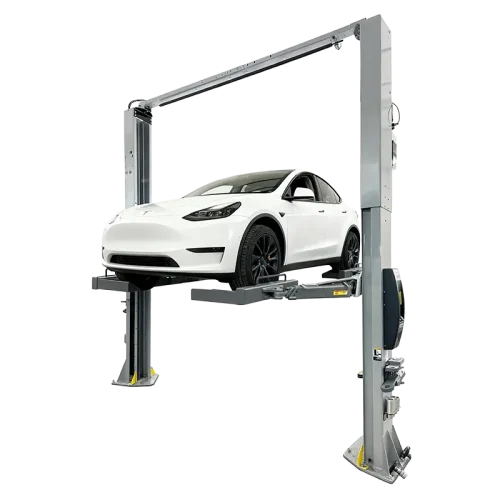
You need full undercar access: choose a 2-post lift
If technicians regularly work on exhausts, transmissions, driveshafts or full suspension, the open space under a 2-post lift is hard to beat. The trade-offs are ceiling height, slab requirements and the care needed to set arms at the correct lift points. Measure the bay before shortlisting one.
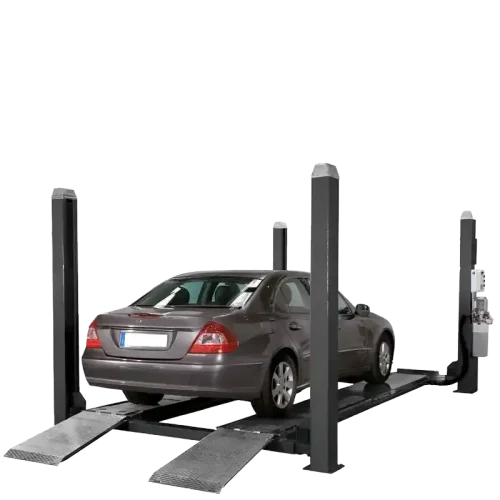
You want storage plus repairs: choose a 4-post lift
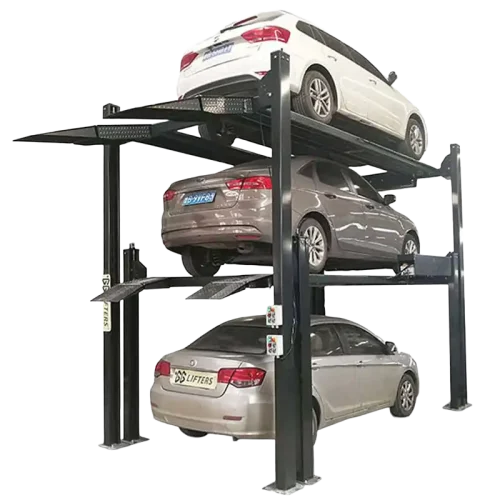
A 4-post lift parks one vehicle above another and handles inspections and general service from a drive-on platform. For wheel or brake work, add rolling bridge jacks. It takes more floor area than a scissor lift, so it suits garages and storage-led projects rather than tight bays.
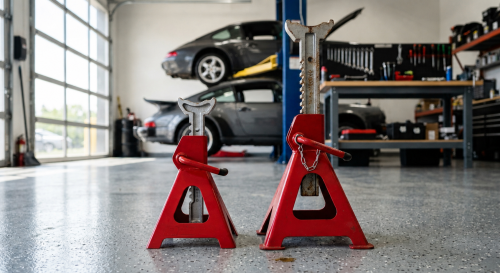
You do occasional wheel or brake work: use a floor jack with stands, or ramps
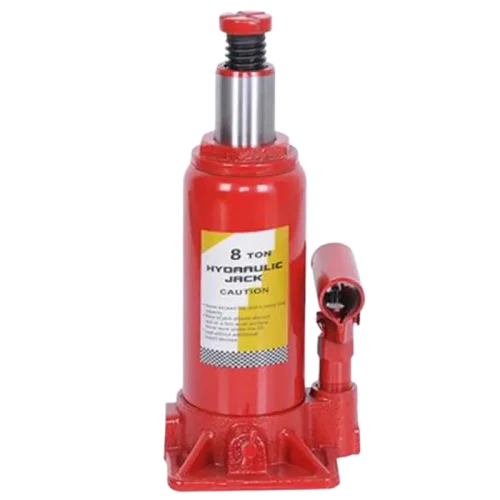
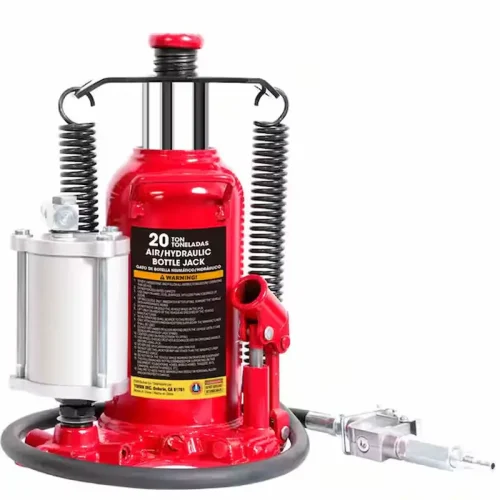
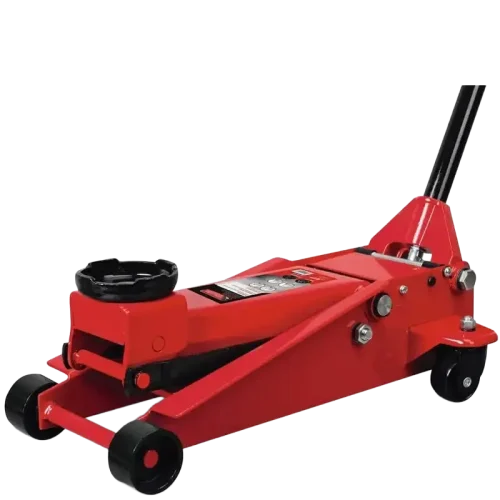
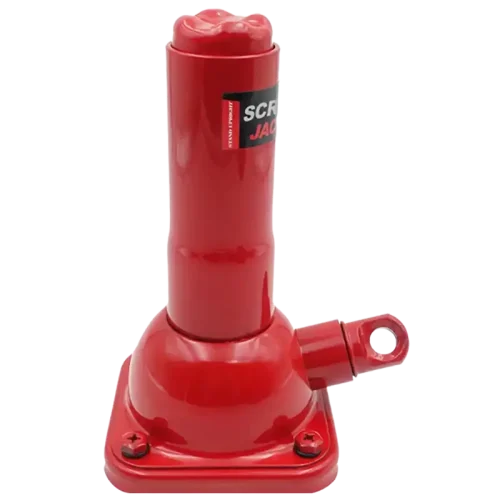
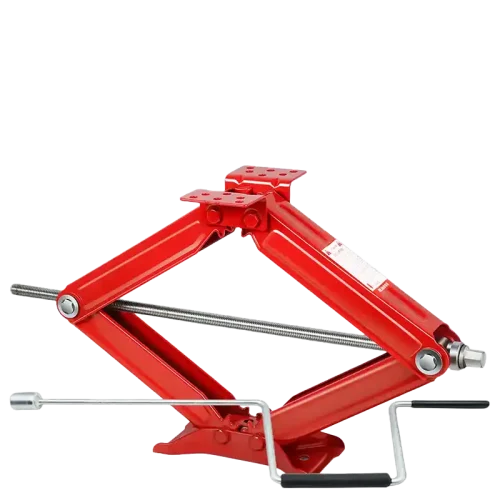
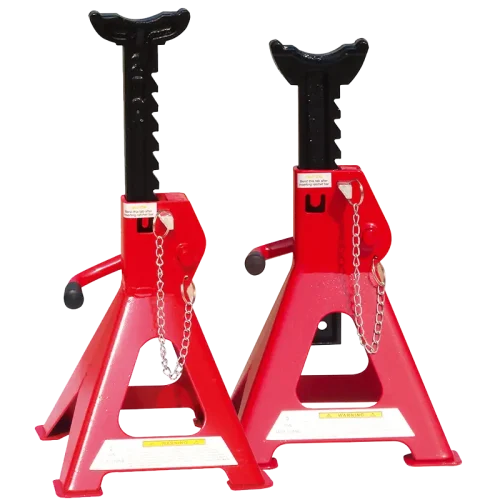
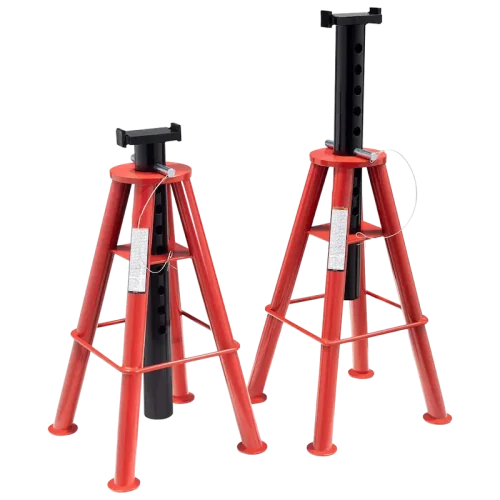
If the volume does not justify a lift, a floor jack plus properly rated stands remains the lowest-cost route. The stands carry the load and the jack only raises it. The jack itself is a separate choice, weighing a hydraulic floor jack vs alternatives such as bottle and scissor jacks.
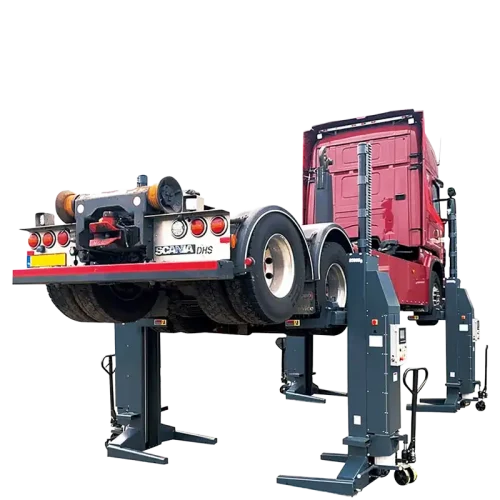
You work on trucks, buses or heavy vehicles: step up
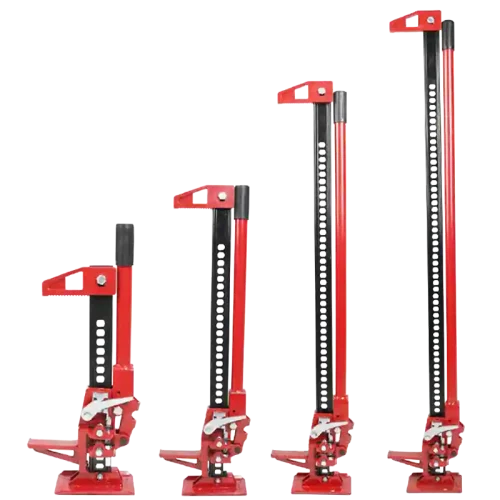
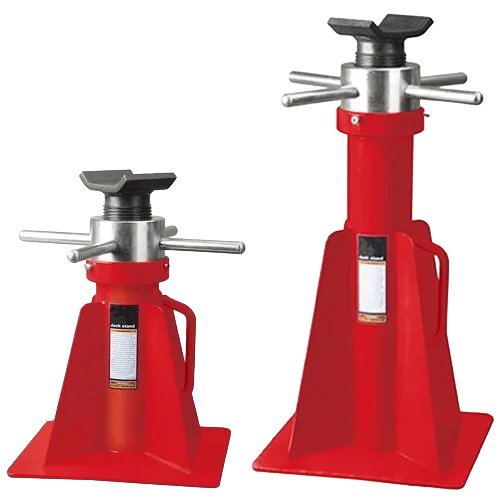
A car scissor lift is not the tool for heavy commercial vehicles. Column lifts, heavy-duty 4-post lifts and heavy-duty jacks are built for that duty, so choose a truck and bus workshop lift by axle load, wheelbase and bay layout. Support under a raised heavy vehicle comes from heavy duty vehicle support stands and truck jack stands rated from 7T to 25T.
Specifying for resale
Distributors and installers carry the documentation burden for the lifts they sell, so the specification should be settled before the order.
Certification by market. For lifts sold into the US, buyers commonly ask for ALI/ANSI ALCTV certification for the exact model. For the EU, they ask for conformity documents against EN 1493, the vehicle-lift safety standard. Other markets have their own rules. Request certificates for the specific model rather than a general claim about a product family, and confirm which documents exist for each destination market before committing to a range.
Capacity ranges. Most car workshops are served by lifts rated in the 3–5 t band, with higher ratings for vans and light commercials. Stock a lower and a higher rating rather than one, and check the rated capacity on the data plate, the load distribution across arms or pads, and the lowest pad height for low-profile vehicles.
Floor-spec documentation. End customers’ installers will ask for slab thickness and concrete strength, anchor type and embedment, an anchor layout drawing and the installation manual. Also request the wiring diagram and a spare parts list, so the lift can be commissioned and serviced locally.
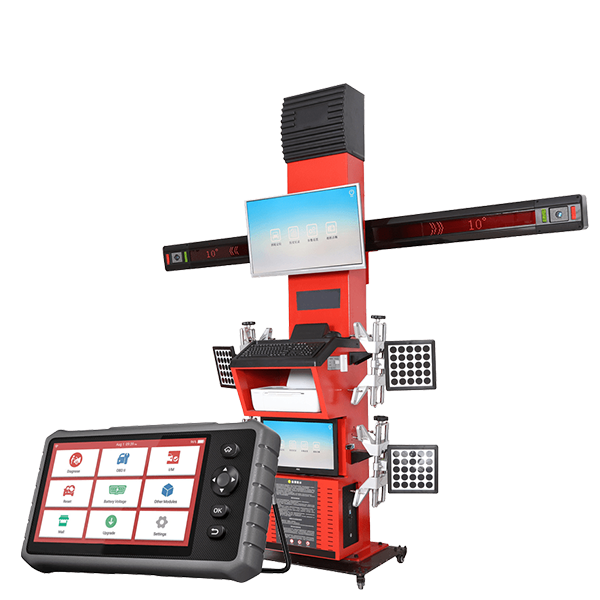
Branding and logistics. OEM or private-label options cover logo, colour, packaging and manuals, and mixed container loading combines lifts with jacks, stands and tyre equipment.
Five checks before you decide
Work type. List the five most frequent jobs. If most are wheel, brake and tyre work, a scissor lift fits. If most are exhaust, transmission or drivetrain, lean toward a 2-post.
Ceiling height. Measure the lowest point in the bay, including lights, doors and beams, and compare it with the lift’s maximum raised height.
Floor condition. Check slab thickness, strength, flatness and cure against the manufacturer’s requirement. Cracked or sloping concrete changes the answer for every lift type.
Power supply. Confirm voltage, phase and circuit protection for the powered unit, or whether the model uses a mobile power pack.
Vehicle weight. Use the heaviest vehicle the bay will realistically service, then check the rating with a margin.
Requirements differ between models and styles, so confirm every check against the specific lift’s manual and installation sheet, and measure ceiling, bay length and side room against the clearance rules for auto lift dimensions.
The realistic substitutes are a 2-post lift, a 4-post lift, a portable or mobile-column lift, ramps, and a floor jack with stands. Pick by the work: 2-post for open undercar access, 4-post for storage, ramps and stands for the lowest cost.
Are car scissor lifts good?
They are good for wheel, brake and tyre work in tight bays and under lower ceilings, especially where the lift folds flat. They are weaker where the job needs open access to the centre underbody.
What is the safest car lift for a small garage or workshop?
No single type is safest. A lift rated for the vehicle, installed correctly and used with its locks engaged is the baseline. Wheel-engaging 4-post lifts are often considered the most forgiving because the vehicle simply drives on.
Are automotive scissor lifts safe?
Yes, within their rating and on a sound floor. Overloading, skipped locks, damaged concrete and hands in the pinch zone are the usual causes of trouble. Ask for the certification that applies to the exact model and market.
Is a scissor lift better than a 2-post lift?
It depends on the dominant job. A scissor lift wins on footprint and ceiling needs, while a 2-post lift wins on open access beneath the vehicle for exhaust, transmission and drivetrain work.
Do scissor lifts need to be bolted down?
It depends on the model. Some surface-mounted units are anchored, others sit on a level slab, and in-ground units go in a pit. The manufacturer’s installation instructions decide, not a category-wide rule.
Can I do transmission or exhaust work on a scissor lift?
Some styles limit centre-underbody access because the scissor mechanism sits below the vehicle. Full-rise and in-ground designs leave more room, but a 2-post lift is usually the better fit when those jobs dominate.
Which lift is best for a low-ceiling workshop?
Scissor lifts and some mid-rise or portable lifts are the usual answer where a standard 2-post will not fit. Compare the lowest obstruction with the exact model’s maximum raised height before ordering.
Yes. We provide OEM and ODM services, including logo printing, custom colors, packaging design, and product specification adjustments. Available options depend on the product type and order quantity.
What is your minimum order quantity (MOQ)?
MOQ requirements vary by product. Most standard products are available in flexible quantities, while customized branding, packaging, or product development may require a minimum order. Contact us with the product model and required quantity for confirmation.
Do you offer samples?
Samples or trial orders are available for most product categories. Sample charges and refund terms depend on the selected product and will be confirmed before ordering.
Which ports do you ship from?
We can arrange shipment from major ports in China, including Shanghai, Ningbo, Shenzhen, and Qingdao. The final port will be selected according to the product location and shipping arrangement.
Which trade terms do you support?
We support EXW, FOB, CIF, and other standard international trade terms. The available option will be confirmed in your quotation based on the order and destination.
Can you supply products beyond your catalog?
Yes. If you cannot find the required automotive tool or workshop equipment in our catalog, send us your specifications, target quantity, and application. Our team can help identify and source a suitable solution.