How to Choose a Tire Changer in 2026: Specs, Features, and Common Pitfalls
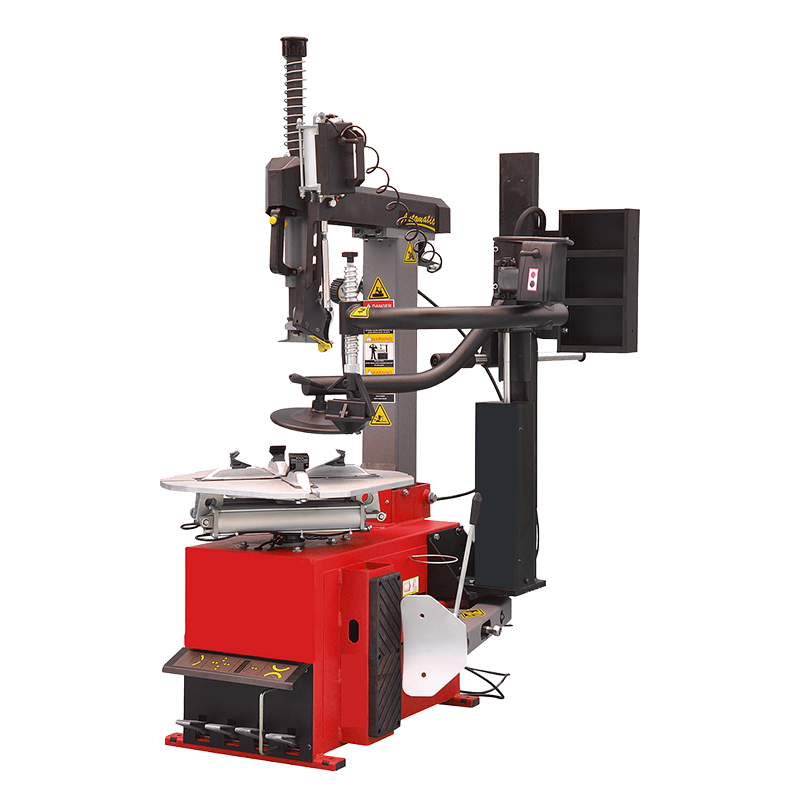
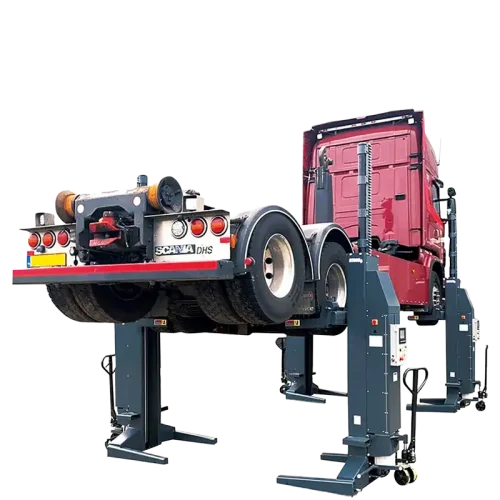
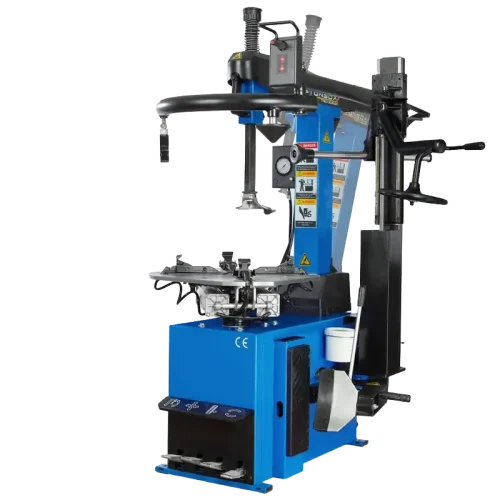
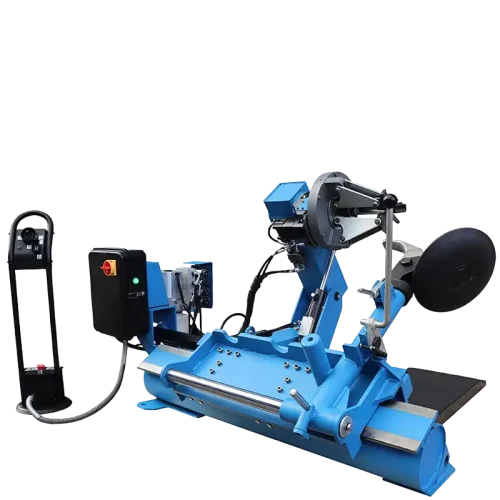
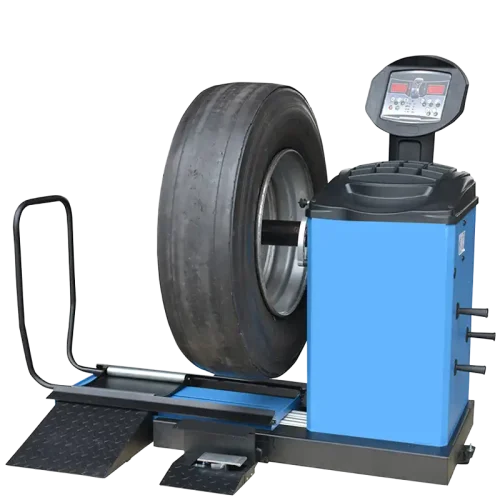
The right tire changer is the one that matches your daily wheel mix — not the flashiest one on the showroom floor. For most general repair shops in 2026, that means a tilt-back machine with a 10–24 inch clamping range, a bead-press helper arm, and pneumatic bead seating around 8 bar. Get those three specs right and you'll handle 95% of passenger cars, light trucks, and the growing share of EVs rolling into the bay. For heavy commercial vehicles, see our range of hydraulic truck tyre changer machines.
Start With Your Wheel Mix, Not the Brochure
Walk your bay before you read a single spec sheet. The fastest way to overspend on a tire changer is to buy for the one Porsche you saw last month instead of the 40 sedans you serviced last week.
Pull a week of work orders and note rim diameter, sidewall stiffness, and how many were low-profile or run-flat. If 80% of your tickets are 15–19 inch alloys, a mid-tier tilt-back machine is plenty. If you're seeing more 20–22 inch EV wheels with stiff sidewalls, you need leverless or at minimum a robust bead-press arm.
For instance, a suburban tire shop running 25 cars a day with mostly sedans and crossovers will get more ROI from a $2,800 tilt-back with helper arm than a $7,000 leverless machine that sits idle 90% of the time. A performance specialist with 30% staggered-fitment work? Opposite story.
Quick wheel-mix audit checklist
Average rim diameter across last 100 jobs
Percentage of run-flats and UHP tires
Largest wheel you realistically expect (with 2-year buffer)
Share of alloy vs steel rims
Any motorcycle, light truck, or commercial work
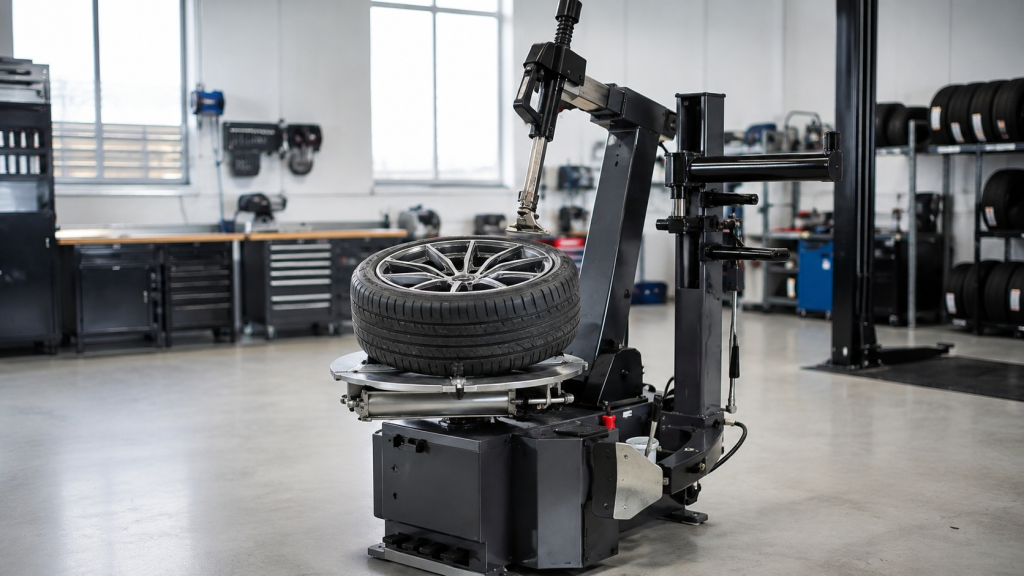
Tire changer servicing an alloy wheel in a busy workshop
The Specs That Actually Matter in 2026
Forget marketing copy. There are six numbers worth circling on any tire changer datasheet.
1. External clamping range
The most-quoted spec and the most misunderstood. Look for external clamping in the 10–24 inch range as a baseline. External clamping is gentler on alloy rims than internal — and internal clamping ranges (typically 12–26 in) are what manufacturers like to advertise to look bigger on paper.
2. Max wheel diameter
Different from rim size. A 24-inch rim with a 35-series tire has a much smaller overall diameter than a 19-inch rim on a lifted truck. Most quality machines handle up to 42–44 inches of total wheel diameter — confirm this if you do light truck or off-road work.
3. Bead breaker force
Aim for 2,500–3,000 kg of breaker force. Anything under 2,000 kg will struggle with stubborn run-flats and aged tires. Cheap machines cut corners here.
4. Operating pressure
Standard is 8–10 bar (116–145 psi). Your shop compressor needs to deliver this consistently — undersized compressors are the #1 reason new tire changers underperform.
5. Turntable rotation speed
Single-speed motors run around 6–7 rpm. Two-speed (6.5/13 rpm) cuts cycle time meaningfully on high-volume days.
6. Motor power
1.1 kW is the minimum for serious daily use. 1.5 kW handles stiff sidewalls without bogging down.
Detail of tire changer external clamping jaws gripping an alloy rim
Swing Arm vs Tilt-Back vs Leverless: Which Style Fits?
This is the decision that defines the next 8–10 years of your tire bay. Each style solves a different problem.
Swing arm (entry-level)
The mount/demount head swings horizontally out of the way. Cheaper, simpler, and fine for steel wheels and basic alloys up to about 22 inches. Downside: the operator has to adjust head height for every wheel, which slows down a busy shop and increases rim-damage risk on soft alloys.
Tilt-back (the workhorse)
The entire post tilts back, locking the head position relative to the wheel. Faster, more consistent, less prone to scratching rims. This is the sweet spot for 90% of general repair and tire service shops in 2026.
Leverless / touchless
No traditional mount/demount bar — the tool hooks the bead and the turntable does the work. Required for ultra-low-profile UHP tires and the heavy EV wheels that are dominating new-car sales. Slower setup but near-zero rim damage. If you're servicing Teslas, Rivians, EQ-series Mercedes, or anything riding on 245/35R21, this is no longer optional.
Manufacturers love adding features. Some genuinely save labor; others are showroom theater.
Worth the upcharge
Pneumatic bead press / helper arm — pays for itself within months if you mount any run-flats or stiff sidewalls. Drops cycle time and operator fatigue.
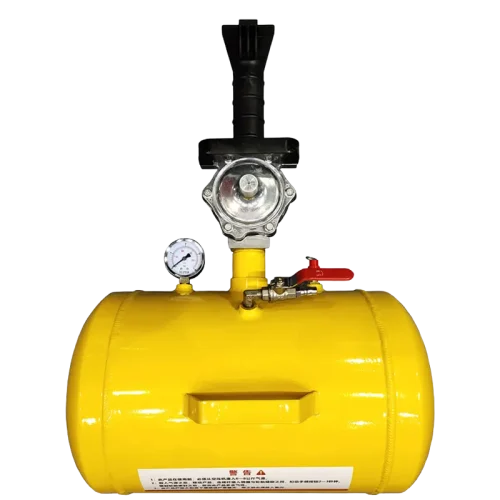
Bead blaster / inflation booster — seats stubborn beads in one shot. Essential for low-profile work.
Adjustable mounting head with plastic inserts — protects alloy finish. Replaceable inserts are a must.
Quick-release pedal valves — small detail, big impact on a 40-tire day.
Skip unless you have a specific use case
Built-in LED “mood” lighting — pure marketing.
Touchscreen displays on basic models — adds cost and failure points without improving the actual changing process.
Motorcycle adapters bundled in — only buy if you actually do bike work; otherwise they collect dust.
A real-world example: a fleet service shop we worked with skipped the helper arm to save $400 on the initial purchase. Within six months they retrofitted one because their two technicians were burning out on commercial van tires. The retrofit cost $700 — paying the upcharge upfront would have saved $300 and three months of slower turn times.
Pneumatic helper arm assisting bead mounting on a tire changer
Common Pitfalls That Cost Shops Money
After years of fielding warranty calls and replacement orders, the same five mistakes show up over and over.
Pitfall 1: Buying for the maximum, not the average
Spending $6,000 on a leverless machine because you might service a Bentley once a year — meanwhile your daily 17-inch crossover work doesn't need it. Buy for your 80th percentile wheel, not the outlier.
Pitfall 2: Ignoring compressor capacity
A tire changer rated for 10 bar operation needs a compressor with sustained CFM, not just peak pressure. Bead seating pulls big bursts of air. A 2 HP / 50L compressor will choke a serious tire changer on busy days.
Pitfall 3: Forgetting floor anchoring
Every quality tire changer needs to be bolted to a concrete slab — minimum 100mm (4 inches) thick. Don't install one on tile, thin slab, or wood subfloor. We've seen machines “walk” during heavy bead breaks because the installer skipped anchors.
Pitfall 4: Overlooking consumables and parts availability
Mount/demount heads, plastic inserts, rim clamp covers, bead breaker pads — these wear out. Buying from a supplier with no spare parts pipeline turns a $3,000 machine into a $3,000 boat anchor in year three.
Pitfall 5: Skipping operator training
The most expensive tire changer in the world will scratch rims if the tech doesn't know how to position the mount head 3–4 mm from the rim edge. Budget half a day for proper training when the machine arrives.
Matching the Tire Changer to Your Shop's Workflow
The machine is only one piece. Where it sits in your bay decides how fast it actually works.
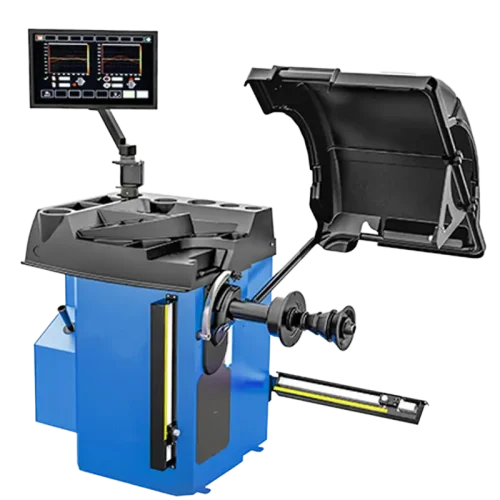
Standard tire changers need roughly 2.5 × 2.5 meters (8 × 8 ft) of clear working radius. Leverless and trucks-capable machines need closer to 3 × 3 meters. Position the changer close to the balancer — ideally with no more than 3 meters between them — so one tech can run both stations on busy days.
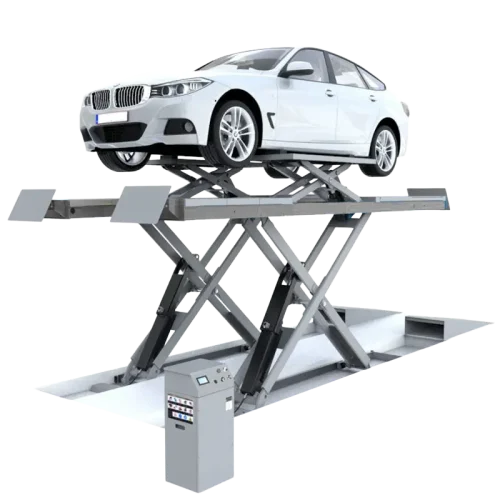
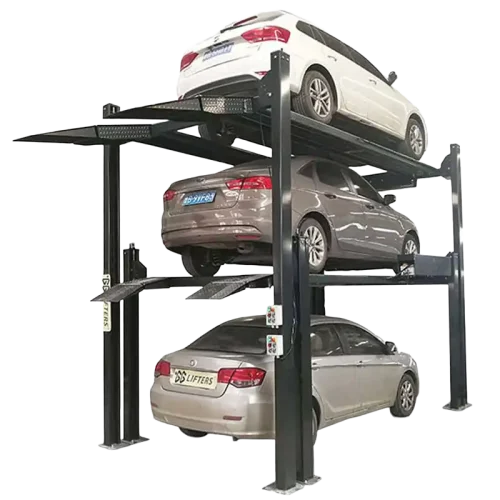
If you're laying out a new bay or reorganizing, our workshop setup and layout guide covers tire bay placement relative to lifts, alignment racks, and parts flow.
Workflow example: 30-cars-per-day shop
A mid-volume tire shop running 30 sets per day should target:
Tilt-back changer with helper arm (8–10 sec faster per tire = 30+ minutes saved daily)
Two-speed turntable
Bead inflation booster
Located within 2 m of balancer, both within 5 m of tire storage
That setup typically pays back the equipment investment in 14–18 months purely on labor time saved.
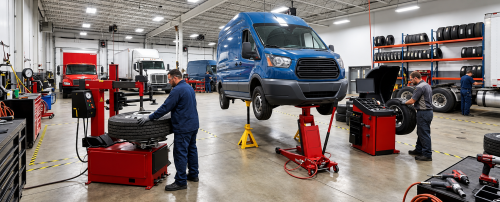
Tire bay layout with tire changer and wheel balancer positioned together
EVs, Run-Flats, and What's Changing in 2026
The fleet on the road is shifting fast, and tire changer requirements are shifting with it.
EV-specific wheels are heavier (often 30–40% more than equivalent ICE wheels), larger in diameter, and frequently fitted with reinforced or noise-dampening tires that are stiffer than what shops saw five years ago. Add the growing percentage of run-flat OE fitments on European premium brands, and the bead-handling demands have climbed.
Three things to verify before buying in 2026:
Wheel weight capacity: at least 75 kg per wheel for general work, 90+ kg if you service Model X, Rivian R1S, or large EV SUVs
Soft-jaw clamping: protects forged and gloss-black alloys that show every scratch
TPMS-friendly tooling: mount heads designed to avoid sensor damage at the valve stem position
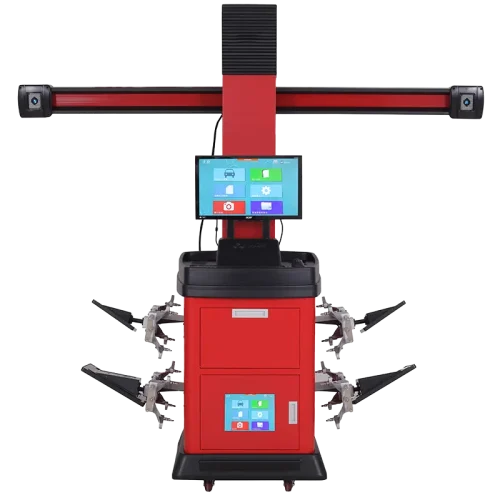
Shops that handle EV battery service or align them regularly should also look at how their tire service area connects with the alignment bay — EV alignment is a $120–180 service and tire work feeds it directly.
Budget Reality Check: What You Get at Each Price Tier
Pricing in 2026 has stabilized after the supply-chain swings of recent years. Here's what realistic budgets look like for new equipment from established manufacturers.
$1,500–$2,500: Entry / occasional use
Swing-arm machines, 10–22 inch range, basic single-speed motor. Fine for a small independent shop doing under 10 tires a day or a fleet workshop with only occasional tire work.
$2,500–$4,500: The professional sweet spot
Tilt-back with helper arm, 10–24 inch external clamping, two-speed motor option, bead blaster. This is where most general repair and tire service shops should land.
$4,500–$8,000: High-volume and specialty
Leverless or touchless machines, 10–30 inch range, advanced bead-assist towers, designed for UHP, run-flat, and EV-heavy work. Worth it if >25% of your volume is 20-inch+ alloys.
$8,000+: Tire specialist territory
Fully automated, robotic-assist tire changers used by performance shops, dealer networks, and high-end detail/restoration centers. Overkill for most general workshops.
Remember: the cheapest path to lost money is buying a machine that can't keep up with your volume. The second cheapest is buying one with capacity you'll never use.
Putting It All Together
Pick your tire changer in this order: audit your actual wheel mix, match the style (swing/tilt/leverless) to that mix, lock in the six core specs (clamping range, wheel diameter, breaker force, pressure, speed, motor), and only then start comparing brands and features. Don't forget the supporting cast — compressor capacity, floor prep, and bay layout matter as much as the machine itself.
If you're sourcing equipment for a new shop, expanding to handle more EV work, or replacing an aging changer that's costing you in slow cycle times, browse the full tire service equipment range at wsatools or reach out for a configuration recommendation based on your daily volume and vehicle mix. We'll help you spec a setup that earns its keep — not one that gathers dust between busy seasons.
Yes. We provide OEM and ODM services, including logo printing, custom colors, packaging design, and product specification adjustments. Available options depend on the product type and order quantity.
What is your minimum order quantity (MOQ)?
MOQ requirements vary by product. Most standard products are available in flexible quantities, while customized branding, packaging, or product development may require a minimum order. Contact us with the product model and required quantity for confirmation.
Do you offer samples?
Samples or trial orders are available for most product categories. Sample charges and refund terms depend on the selected product and will be confirmed before ordering.
Which ports do you ship from?
We can arrange shipment from major ports in China, including Shanghai, Ningbo, Shenzhen, and Qingdao. The final port will be selected according to the product location and shipping arrangement.
Which trade terms do you support?
We support EXW, FOB, CIF, and other standard international trade terms. The available option will be confirmed in your quotation based on the order and destination.
Can you supply products beyond your catalog?
Yes. If you cannot find the required automotive tool or workshop equipment in our catalog, send us your specifications, target quantity, and application. Our team can help identify and source a suitable solution.