86-1506-1936-695
Pneumatic Brake Bleeders

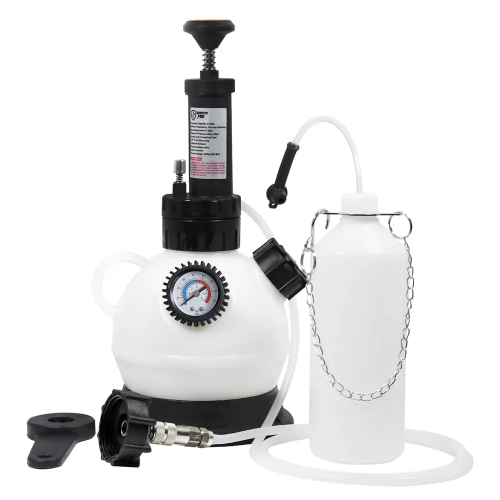
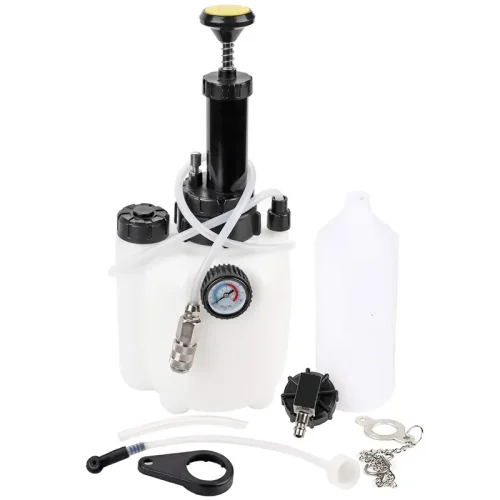
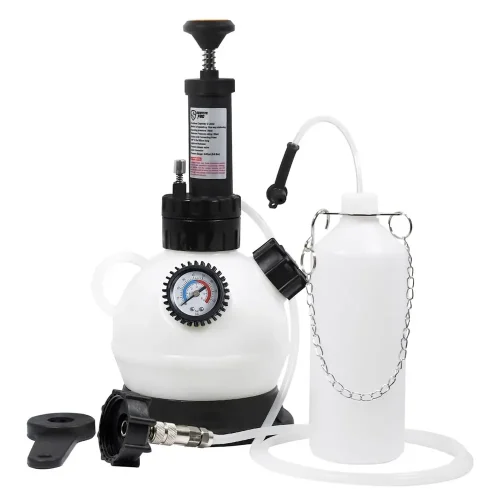
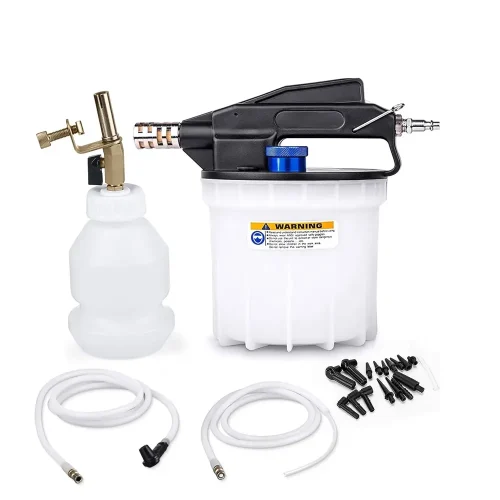
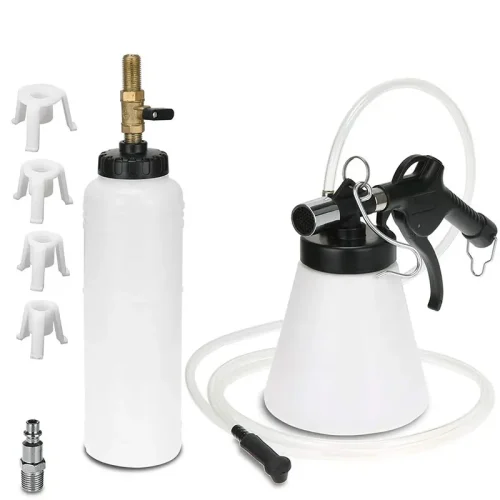
Pneumatic brake bleeders use workshop compressed air to simplify brake fluid bleeding and extraction. WSAT offers 1L, 2L and 3L air-powered brake bleeder kits for brake and hydraulic clutch service, with options including waste fluid bottles, refill bottles, hoses, magnetic mounts and master cylinder adapters.

How Pneumatic Brake Bleeders Work

Pneumatic brake bleeders use a workshop air supply to assist brake fluid service without relying on repeated manual pedal pumping. Depending on the bleeder design, compressed air can power fluid extraction while separate refill components help maintain the fluid level in the master cylinder during service.

  • Air-Powered Fluid Extraction

    Vacuum-style pneumatic brake bleeders use compressed air to create suction at the bleeder valve, drawing old brake fluid and trapped air into a collection reservoir. This setup is useful for routine brake fluid bleeding and replacement where controlled fluid collection is required.

  • Fluid Refilling During Service

    Models supplied with refill bottles help technicians maintain fluid in the master cylinder reservoir while bleeding the system. Choosing the correct bottle, hose and adapter configuration helps reduce interruptions during multi-wheel brake service.

Brake and Clutch Service Applications


Pneumatic bleeder kits can be configured for routine hydraulic brake service as well as compatible hydraulic clutch systems. Reservoir capacity, hose layout and included accessories should be selected according to the vehicle and service procedure.

Brake Fluid Bleeding & Replacement

Air-powered brake bleeders help remove old fluid and trapped air from hydraulic brake lines during fluid replacement, caliper service and other brake system maintenance. Compact 1L models are suitable where portability matters, while 2L and 3L reservoirs provide additional collection capacity for larger or repeated service jobs.

Hydraulic Clutch Bleeding

Many pneumatic brake and clutch bleeder kits can also be used to bleed compatible hydraulic clutch circuits. The required connection method depends on the clutch system, bleeder valve and fittings used on the vehicle.

Choosing a Pneumatic Brake Bleeder

The right pneumatic brake bleeder depends on service volume, reservoir capacity and the accessories required for the vehicles being serviced.

  • 1L compact bleeders for portable and lower-volume service
  • 2L models for general workshop brake and clutch bleeding
  • 3L models for jobs requiring greater fluid collection capacity
  • Refill bottles for maintaining master cylinder fluid during bleeding
  • Waste fluid bottles for controlled collection of removed brake fluid
  • Hoses and adapters for different service connections
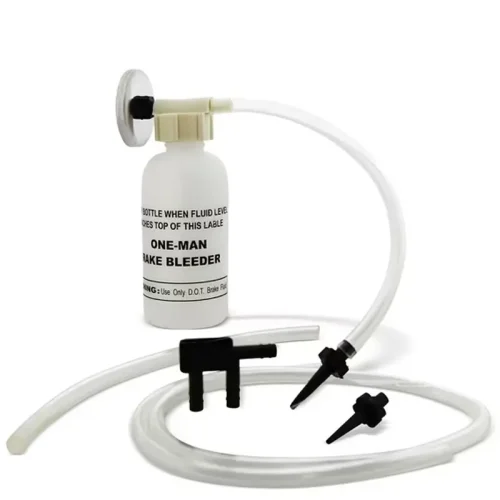
  • Magnetic-mount kits for convenient one-person brake bleeding
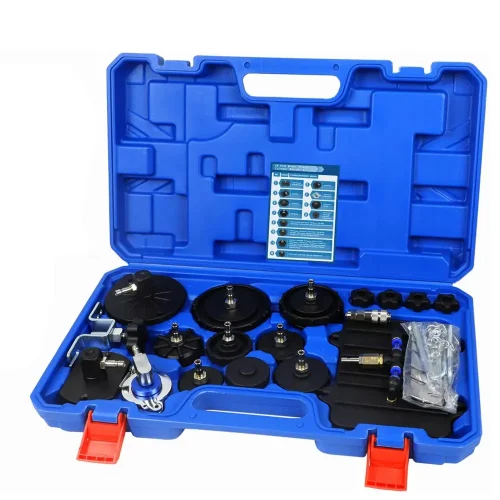
  • Master cylinder adapter sets for broader vehicle coverage

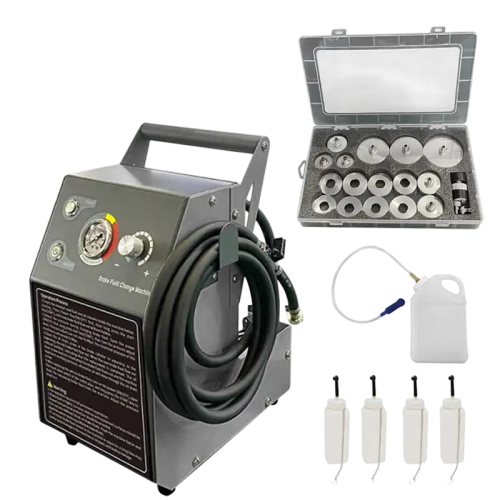
For workshops that also require electric brake fluid exchange equipment, see our Brake Fluid Exchanger & Bleeder range.

Can't Find your Product? Download our Catalogue

FAQs

What is a pneumatic brake bleeder?
A pneumatic brake bleeder is an air-powered tool used during hydraulic brake bleeding and brake fluid replacement. Depending on the design, compressed air may be used to create vacuum for fluid extraction or support another controlled bleeding process.
How does a pneumatic brake fluid bleeder work?
The tool connects to a workshop compressed-air supply. On vacuum-type models, the air supply creates suction that draws brake fluid and trapped air through the bleeder valve and into a collection reservoir.
Can a pneumatic brake bleeder be used for clutch systems?
Many pneumatic brake and clutch bleeder kits can be used with compatible hydraulic clutch systems. Check the vehicle service procedure and confirm that the supplied hoses and fittings match the clutch bleeder connection.
Should I choose a 1L, 2L or 3L brake bleeder?
A 1L model provides a compact option for lighter service work. A 2L model offers more fluid capacity for general workshop use, while a 3L reservoir can reduce the need to empty the collection tank during higher-volume brake service.
Do I need a master cylinder adapter?
An adapter is required when the bleeding or refilling setup needs a secure connection to the master cylinder reservoir. The correct adapter depends on the reservoir design and vehicle application.